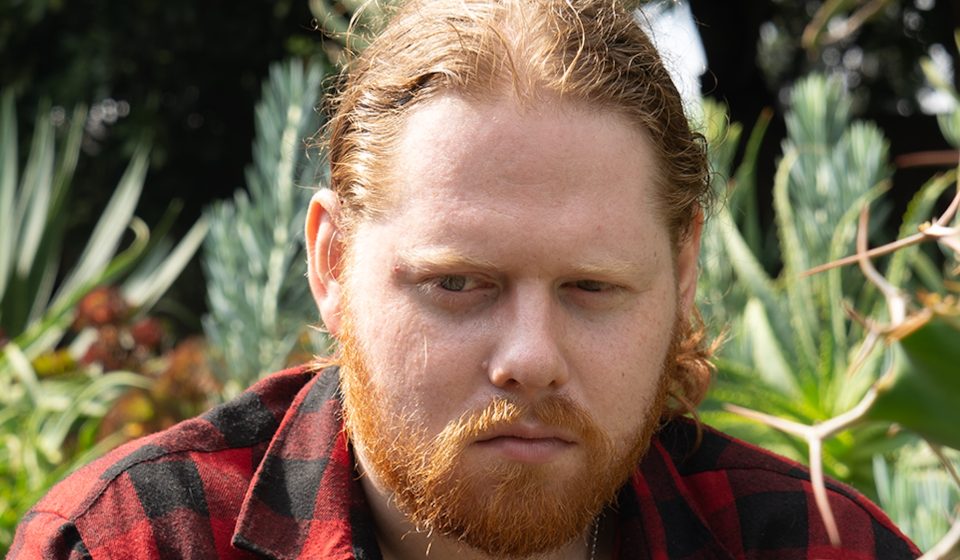
Rooi van aard premieres at Silwerskerm Festival
As the 14th kykNET Silwerskerm Festival gets ready to open its doors in Camps Bay on 19 August 2026, audiences can look forward to a diverse programme of South African films and documentaries that explore everything from identity and belonging to history, relationships and the experiences that shape us. Among the short documentaries screening at this year’s festival is Rooi van aard, filmmaker Niël Coetzee’s deeply personal and often humorous exploration of what it means to grow up as a redhead. The documentary screens as part of the festival’s short documentary programme on Thursday, 20 August, with a repeat screening on Saturday, 22 August.
The kykNET Silwerskerm Festival 2026, taking place from 19 to 22 August in Camps Bay, brings together 22 films, including short films, documentaries and feature films, while also creating space for emerging South African filmmakers and industry conversations.
Rooi van aard tackles a subject that is immediately recognisable yet surprisingly unexplored on screen: the experiences of people with red hair. It is the rarest hair colour in the world, with only 1% to 2% of the population having red hair. No wonder redheads stand out so much, and they sometimes have to endure all manner of strange comments and behaviour.
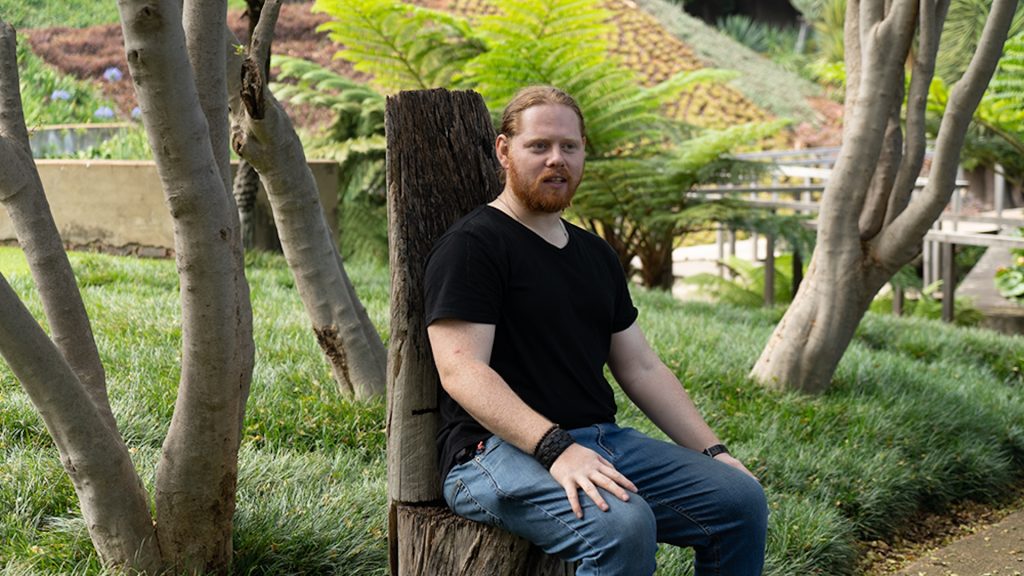
Niël Coetzee, co-director and co-producer of Rooi van aard (and a redhead), put the spotlight on fellow students with red hair for a project during his film studies. He never thought that one day he would be the main character in his own documentary on the subject. But when his proposals for narrative short films didn’t catch the eye, he decided to focus on a subject he knew others wouldn’t readily tackle. As part of the unique group with red hair, he ultimately not only stood behind the camera but also made his own story part of the documentary short film. The result is a documentary that moves beyond jokes and stereotypes to explore identity, otherness, acceptance and the lasting impact of childhood experiences.
In this interview, the filmmaker opens up about the documentary and more.
Children can distinguish colour from a young age, but when did you realise red hair is different? And how?
In my case, I was the only redhead in the family. Even when my sister made her appearance two years later, she had dark brown hair like my father. I could immediately see a difference, and also in interactions with adults who regularly wanted to touch my hair, as if it were unreal. But the first moments I can remember were in Grade 1 at Laerskool Elarduspark, and I was the only redhead among 208 classmates. That was the day I began to realise I was unique.
Discrimination is rife and takes various forms. Blondes are mocked for being dumb. What is people’s issue with red hair?
The stereotypes about redheads that I discovered and experienced in my research were that people assume redheads are more prone to aggressive outbursts and moody temperaments. In my school days, there was also this tendency for people to think redheads were soulless, thanks to an episode of South Park. All the colourful nicknames and the teasing were also quite something to get used to at first.
What made you decide on this idea? And where did you track down all the other redheads? Are there character traits that are quite unique to redheads, because the title alludes to human nature…
The idea comes from a university project I did years ago about redhead students and their experiences. In December 2024, I spoke to my sister about perhaps entering for the first time for the short documentary section of the Silwerskerm Festival, after years of unsuccessful entries with ideas for short films. That’s where the seed was planted, which then underwent its own germination through the Silwerskerm process – from a passive role behind the camera to a main character in front of the camera.
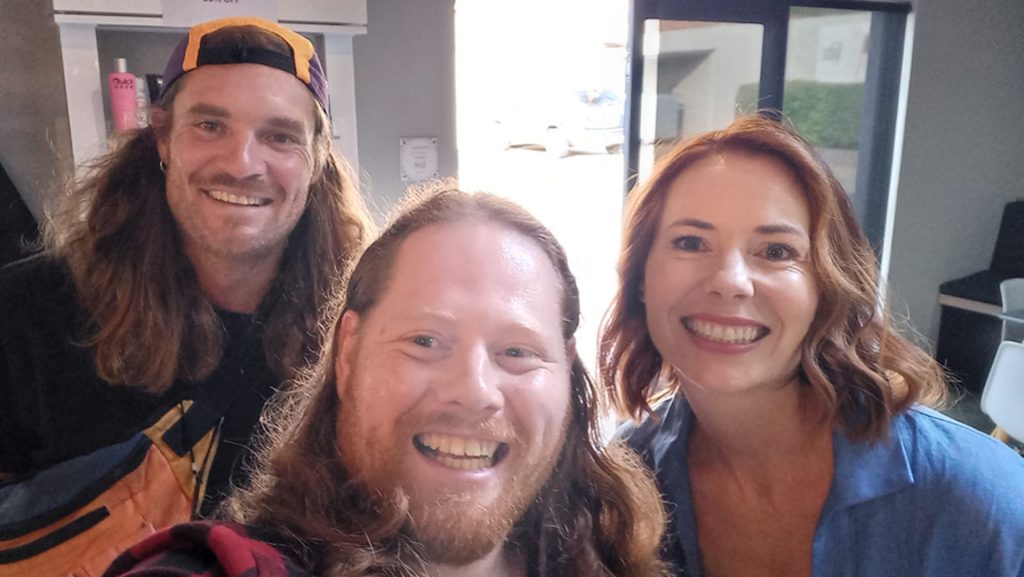
Tracking down all the guests and redheads was a team effort with my co-director and co-producer, Hancu Louw. Anthea Pokroy (photographer) and G.P. van Rheede van Oudtshoorn (former lecturer and communication specialist) played direct and indirect roles in my life that highlighted the possible positive side of being a redhead. With Anel Alexander, I wanted to hear why she dyes her hair red and find out which characteristics she identifies with redheads. The Roos family and Maude Sandham, included thanks to Hancu’s connections, made it possible to explore a new generation and the entertainment world.
The title was chosen to reflect the nature of redheads and to see if I could learn something from these guests that could improve my worldview from a more self-conscious to a jovial redhead.
Naturally there are elements of the subject that contain humour, but ultimately this is a very personal journey for you. Please tell us more.
It was a challenge because I don’t easily talk about my feelings. To then share those feelings with strangers in the documentary was difficult. Precisely because of my own experiences that I address in Rooi van aard, I had to share these feelings with my mother for the first time during filming, and I could see how it affected her. So yes, it was personal and actually also liberating to hear what her point of view was. I also realised I would have to share stories and important moments in my life, even if it was for the first time, otherwise it would be a useless film with long uncomfortable silences. Moreover, I also had to be willing to answer difficult questions that might arise about identity, otherness, and uniqueness. Fortunately, I could rely completely on my team and trust them fully.
My plan was always to give Rooi van aard a light, quirky, and humorous tone that makes it more accessible than a heavy, sombre approach. I believe this short film balances the light with my life experience.
A very specific subject, but still very universal themes. What themes are you working with? Did you want to convey a specific message?
The documentary deals with universal themes such as otherness, acceptance, and identity. I would like every redhead child out there to realise that they are unique, and even though the world doesn’t always like uniqueness, it’s not exclusively the negative moments that define you.
With your long hair, you’re clearly not trying to hide it. Do people still make comments? How do you react as an adult?
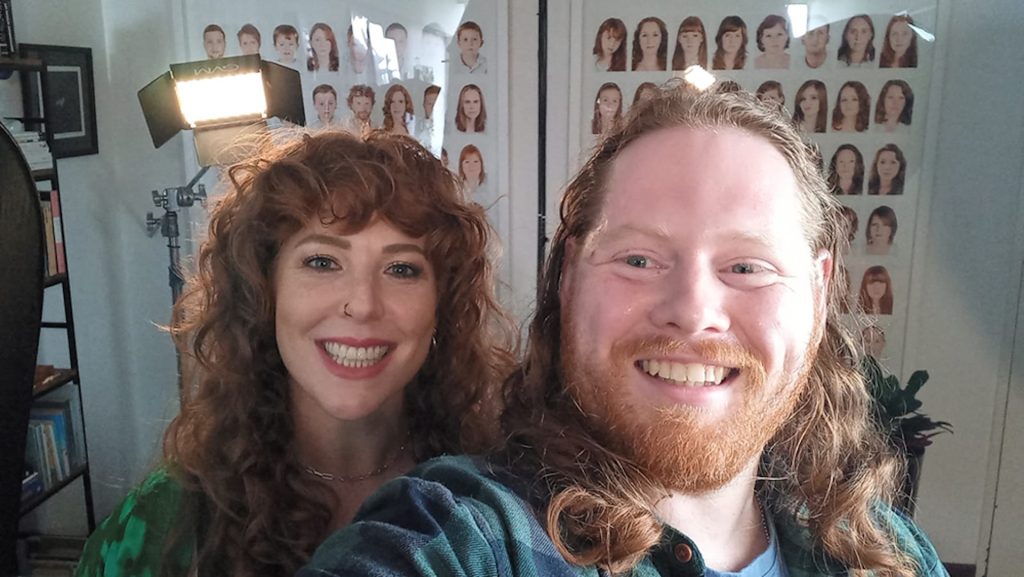
Well, I wore my hair short for 27 years, but as I started shifting more to online work, I decided to let my hair grow. The legendary writer Alan Moore also served as inspiration for my new appearance. Strangely enough, there was recently an incident in church where an older lady just wanted to touch my hair. As an adult, I just laugh it off or say something humorous.
Anything else you would like to share with viewers?
I hope this short documentary helps those who feel different and excluded because of the psychological wounds inflicted by bullies or tormentors in their childhood years, and shows them that everything is going to be okay and that there is healing.
*The 14th kykNET Silwerskerm Festival takes place from 19 to 22 August in Camp’s Bay, Cape Town. Tickets for the films, as well as the prestigious awards ceremony on Saturday 22 August, are available at Quicket.
For the full program, visit www.silwerskermfees.co.za.