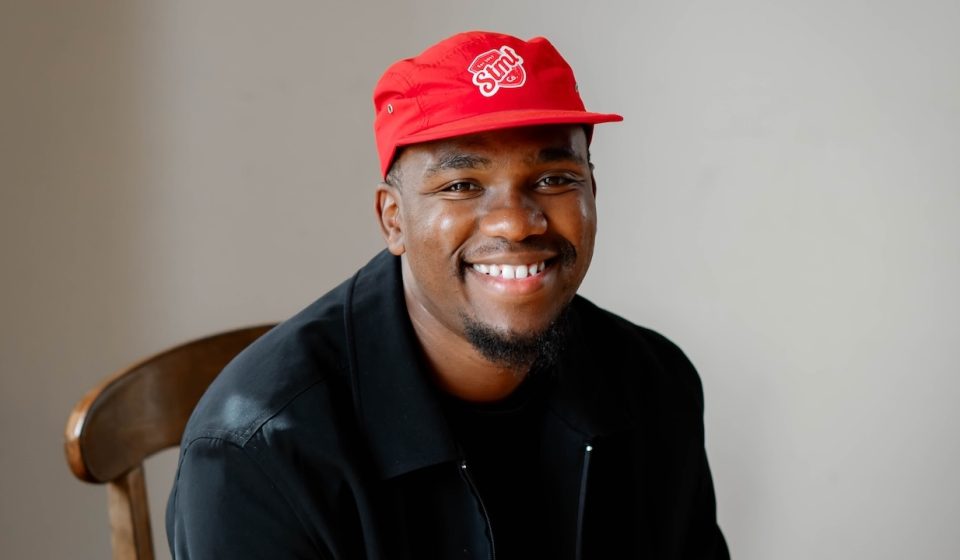
Ntokozo Mlaba is building a filmmaking career on his own terms
There is something quietly compelling about Ntokozo Mlaba’s approach to filmmaking. At 25, he is earning recognition at a moment when South African cinema continues to negotiate questions of identity, representation and whose stories take centre stage. Rather than treating each accolade as a destination, Mlaba regards it as part of a longer journey, shaped by persistence and a conviction that African stories deserve to be told on their own terms.
After studying drama at the National School of the Arts, he pursued a Bachelor of Commerce in Law at the University of the Witwatersrand, teaching himself filmmaking during the COVID-19 lockdown through online tutorials and experiments with a phone and an entry-level camera. Since then, his work has travelled well beyond those beginnings. From To Be Seen (2022) and The Passage (2024) to his latest short film, Melusi, Mlaba has explored the social realities shaping Black life in South Africa. His recognition at the 2024 Joburg Film Festival and the 2026 South African Film and Television Awards, alongside his inclusion in the Mail & Guardian’s 200 Young South Africans list, marks a trajectory worth following.
What makes Mlaba particularly exciting is not simply the speed of his ascent, but the thought behind his work. As a filmmaker and managing director of Umphakathi Artists, he is interested not only in the stories reaching the screen, but also in creating conditions for independent filmmakers to tell them. His ambitions extend beyond individual achievement towards a creative community where emerging storytellers can find support, resources and audiences.
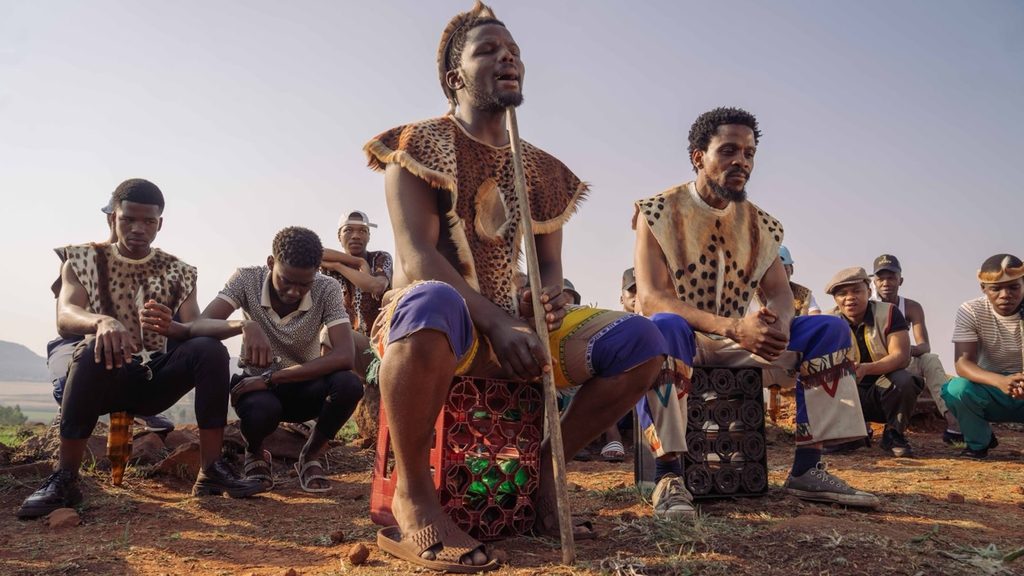
That sensibility finds personal expression in Melusi, a rural KwaZulu-Natal drama about a young shepherd who dreams of reaching Johannesburg and steals a sheep intended as the prize in an Ingoma competition. Beneath the premise lies a searching question: what happens when the future we imagine conflicts with the people, traditions and places that shaped us? Drawing on Mlaba’s connection to urban Johannesburg and his family’s home in eNquthu, the film examines ambition, belonging and the distance between the life we inherit and the one we hope to build.
The film’s recognition as a finalist in FAME Week Africa’s 2026 Inclusive Lens Awards adds another dimension. Through Nkokheli, Melusi’s older brother, Mlaba approaches disability representation by allowing a character to exist beyond a single defining experience. Nkokheli is a respected leader with his own contradictions; his story is also about love, responsibility and learning when to let another person find their own way.
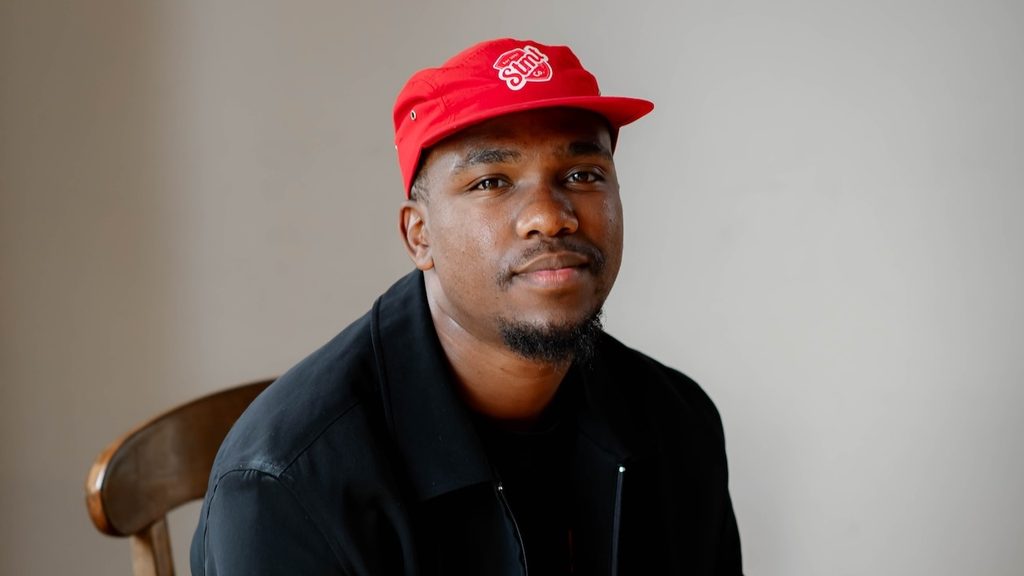
Mlaba hopes to make films rooted in African experiences yet open to audiences everywhere, confronting difficult social realities without sacrificing tenderness or humanity. As he develops Melusi into a feature-length film, he remains focused on the work ahead. The recognition is arriving, but the work itself remains the point. Rather than presenting himself as a filmmaker who has already arrived, Mlaba is building towards the kind of cinema he wants to spend a lifetime creating.
TV Mzansi’s Xabiso Ngqabe sat down with the award-winning director to talk about his remarkable run, Melusi, being recognised at FAME Week Africa.
You’ve had a remarkable run in 2026: from winning a SAFTA to being named one of the Mail & Guardian 200 Young South Africans, and now Melusi is recognized at FAME Week Africa. What does it mean to you?
It’s a really affirming moment, but I also try to remember that none of these things happen in isolation. I’ve been working towards this since high school, and so much of the journey has been about showing up, learning, failing, improving and continuing to do the work.
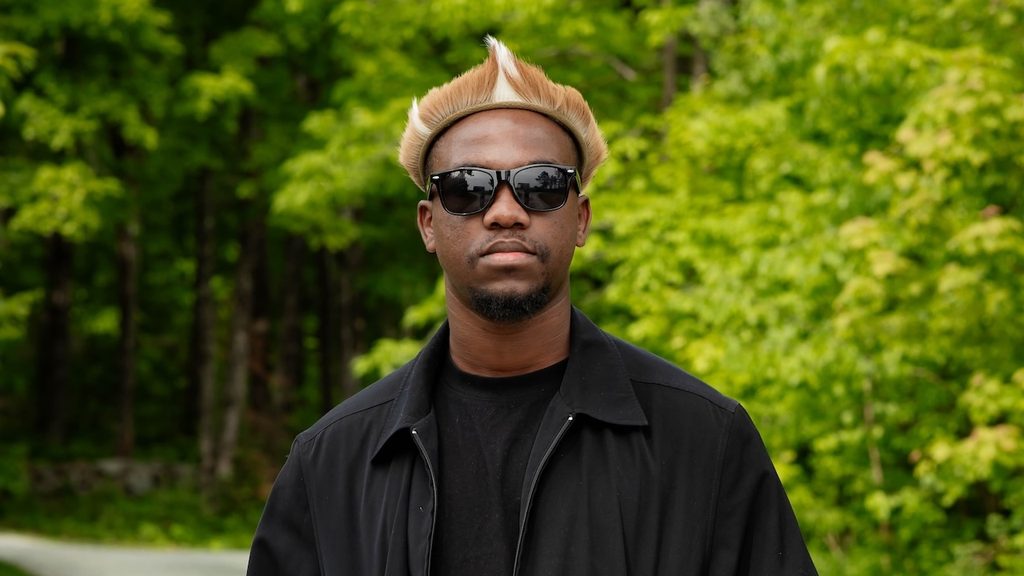
There are so many young independent Black filmmakers trying to tell stories that are personal to them and to their communities, often without the resources or connections that make the journey easier. So when a film like Melusi is recognised, I feel like it creates a little more space for those kinds of stories.
What was the starting point for Melusi, and the story you felt compelled to tell?
Melusi is very personal to me. I grew up in urban Johannesburg while maintaining a close relationship with my family in rural KwaZulu-Natal, specifically eNquthu. I think Melusi came out of trying to understand what home means to me and where I locate myself within those two worlds. The personal is always political for me, so even when I’m telling a story about one young man in rural KwaZulu-Natal, I’m really thinking about larger questions around opportunity, class, tradition, migration and the kinds of futures we imagine for ourselves.
I made the film as part of my honors film submission at AFDA and I am continuing to work on the project as a feature length film for my debut offering.
FAME Week Africa recognised Melusi through the Inclusive Lens Awards for its representation of disability, particularly through Nkokheli, played by Wanda Zuma. What did authentic disability representation mean to you when developing the character?
For me, authenticity begins with allowing a character with a disability to exist as a whole person rather than making their disability the entirety of their identity. Nkokheli is Melusi’s older brother and the moral compass of the village. His disability is part of his lived experience, but it doesn’t define his capacity to lead, to love, to be conflicted or to make mistakes. Nkokheli is a person first. I was interested in giving him an emotional life and an arc that existed beyond the question of disability. His real struggle is with his relationship with his brother and with learning that Melusi doesn’t need another father, he needs someone who believes in him.
So for me, authentic representation means resisting the instinct to turn disability into a symbol or a lesson for an able-bodied audience. Nkokheli is a person first. He has authority, vulnerability, frustration, love and shortcomings. I think allowing characters to simply exist in their fullness is an important part of how we make more honest African stories.
What conversations did you have with Wanda Zuma about Nkokheli, and what did he bring to the character that surprised or challenged you?
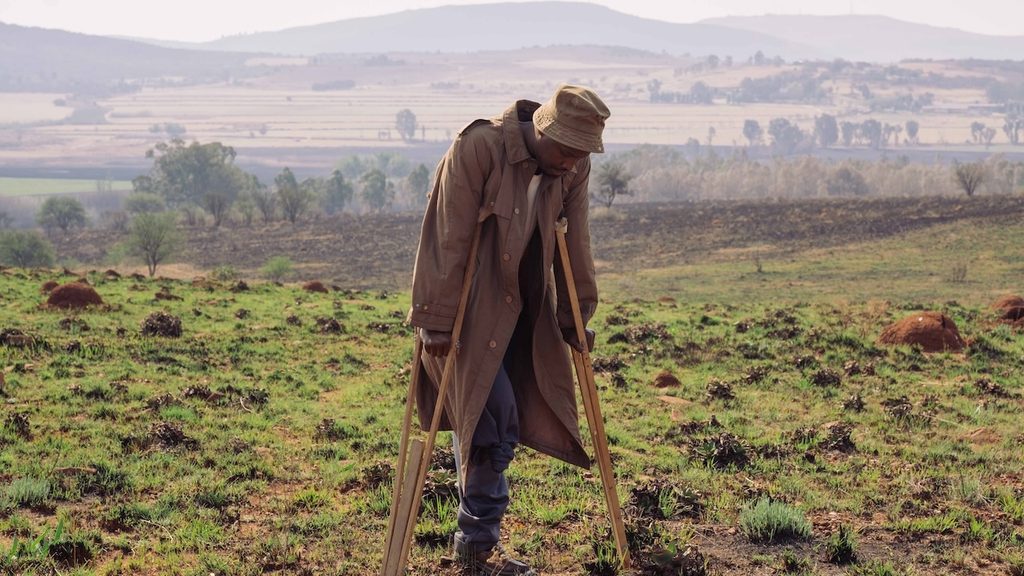
What interested me most about Nkokheli was the tension between his outward authority and the tenderness underneath it. He is the person trying to hold the community together, and at the same time he’s struggling with his own relationship with his younger brother.
Wanda brought a humanity to that tension that helped me see Nkokheli not simply as the person standing in Melusi’s way, but as someone who is also carrying his own disappointments, responsibilities and hopes. That was important because I never wanted him to become an obstacle character.
At the heart of Nkokheli’s arc is learning to let go, to understand that being a brother doesn’t necessarily mean controlling or protecting someone through authority. It means being able to believe in them.
When you imagine the filmmaker you want to become five or ten years from now, what kinds of stories do you hope your name becomes associated with?
I hope my name becomes associated with stories that are deeply African but also deeply human, stories that allow us to see ourselves in our fullness. I’m interested in stories about identity, belonging, dignity and the contradictions of the societies we live in. I want to make work that is politically conscious without losing tenderness and socially engaged without reducing people to the issues they experience.
A big part of that is also pushing against the idea that African stories need to be filtered through a Eurocentric gaze to have cinematic value. After experiencing FESPACO in Burkina Faso and seeing an entire city come alive around African cinema, I was reminded of how important it is for us to create images of ourselves that come from within our own cultural contexts.
Ultimately, I want to make films that feel honest to where I come from, while still being able to travel. I want them to be specific enough to belong to a particular community, but emotionally universal enough that someone on the other side of the world can recognize themselves in them. And beyond the films themselves, I want to be part of building an independent filmmaking ecosystem where more people can tell their stories and where filmmakers can support each other.
And finally, why should audiences who encounter Melusi at FAME Week Africa seek it out, what do you hope stays with them after the credits roll?
I hope audiences encounter Melusi as more than a story about a young man who wants to get to Johannesburg. It’s a story about the disgruntlement of young people with the socio-political state of things within the context of a rural environment.
Melusi believes Johannesburg is the answer to his problems, and his desperation to reach that imagined future leads him into conflict with the people and place he comes from. I think many of us know what it feels like to believe that our lives will begin somewhere else, that if we can just get to another city, another country, another opportunity, then everything will change. I wanted to interrogate that feeling while also asking what happens to the places and people we leave behind in pursuit of those dreams.
More than anything, I hope people leave thinking. I don’t necessarily need everyone to arrive at the same conclusion I did when making the film. I’d rather the film become a point of departure for conversation. If someone walks away questioning something about themselves, their relationship to home, their ambitions, or the society around them, then I think the film has done something meaningful.
Melusi is a finalist in the Representation of Disability category for scripted films at the 2026 Inclusive Lens Awards, taking place on Thursday, 29 October, at 5pm during FAME Week Africa in Cape Town.