
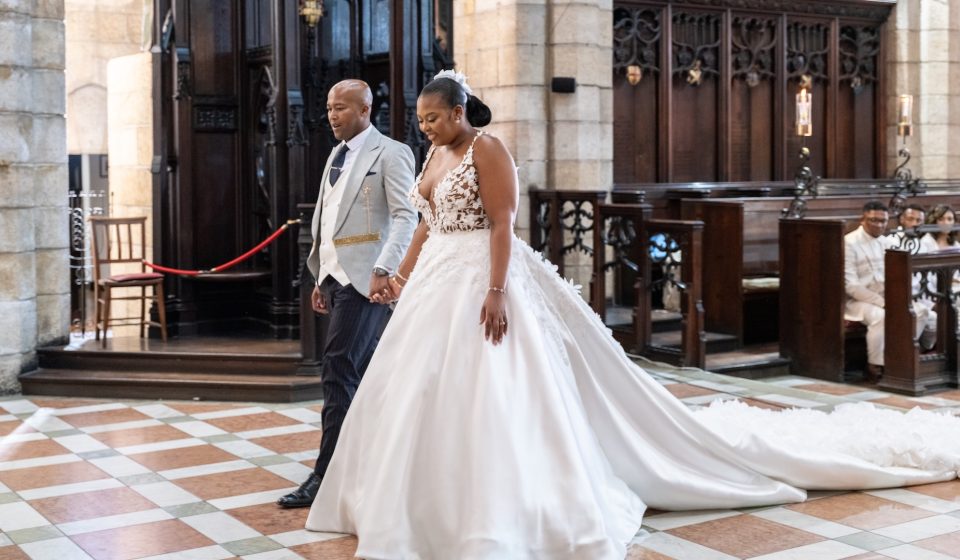
Stars & Vows: Anele & Buzza – A story about love, family and everything that comes with it
There is something quite interesting about watching two people prepare to get married when the people around them have known them long before the wedding invitations, the beautiful clothes, the carefully selected colour palettes and, of course, the Netflix cameras. With Stars and Vows: Anele & Buzza, we are here for the wedding first, but the journey is where the real television happens. The four-part South African Netflix production follows broadcaster Anele Mdoda and her husband, Prince Bonelela James Mgudlwa, affectionately known as Buzza, as they prepare for their wedding. It takes viewers into the world of two people whose relationship has a history extending well beyond their current celebrity status, while introducing us to the family relationships, friendships, cultural expectations and logistical headaches that come with bringing two lives together. And what a journey it is. In our Stars and Vows review, we explore what makes this Netflix special an interesting reality television production.
For viewers expecting an uninterrupted parade of wedding dresses, celebrity guests and expensive celebrations, there is considerably more happening here. There are difficult conversations, unresolved family relationships, moments of vulnerability, friendship, laughter and the occasional reminder that having a generous wedding budget does not necessarily mean everything will go according to plan. In fact, somewhere between the family conversations and the wedding preparations, one begins to understand that the biggest production challenge might not be getting everybody to Stellenbosch. It might be getting everybody emotionally ready to be there.
*** This articles contains spoilers for the first two episodes. If you’ve watched episodes 1 and 2, you can continue reading.
First, who exactly are Anele and Buzza?
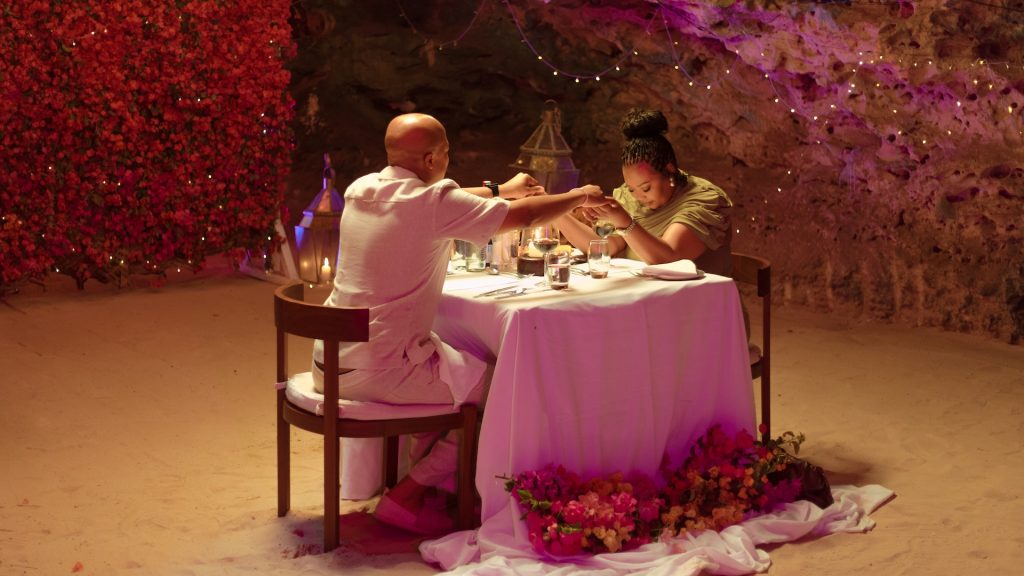
It is worth establishing who these two people are because their professional identities and personal histories add important context to the series. Anele Mdoda is a South African broadcaster, radio and television presenter, media personality and film and television producer. She is particularly well known for her work on 947, including Anele and the Club, and has built a career that extends well beyond radio. Calling her simply a radio personality would be selling her career rather short. Through Rose and Oaks Media, which she co-founded with Frankie du Toit and Paul Buys, Anele has developed an impressive presence in film and television production. Her production credits include Netflix‘s Ludik, The Masked Singer South Africa and the Oscar-nominated short film The Last Ranger, which received an Academy Award nomination for Best Live Action Short Film in 2025.
Prince Bonelela James Mgudlwa, known as Buzza James, is an attorney and a member of the AbaThembu royal family. His professional identity is important too: he is an admitted attorney, not simply someone introduced to audiences through his relationship with a famous broadcaster. He is also the son of Chief Mongezi Mgudlwa, and the family traditions and responsibilities associated with his royal background are part of the story. The interesting contrast between the couple is that Anele is accustomed to a very public professional life, while Buzza is a considerably more private figure. Yet, watching them together, there is a familiarity that suggests neither is particularly interested in performing a relationship for the cameras.
A love story that started long before the wedding
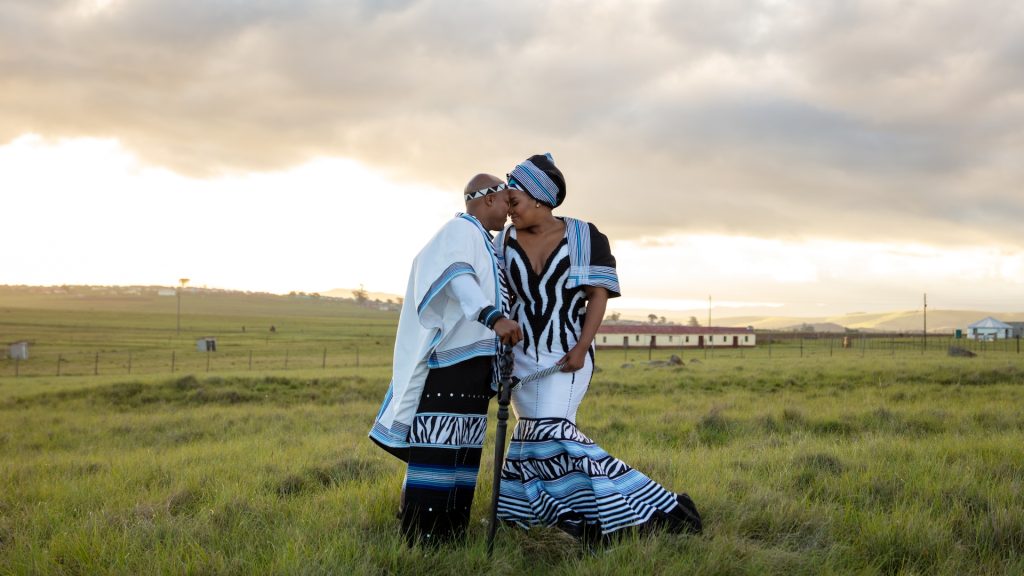
One of the details that immediately changes how we understand the relationship is that Anele and Buzza did not meet as two established public figures who happened to fall in love. Anele has spoken about meeting Buzza when she was 16. They knew each other during their younger years, dated in their late teens and university years, and maintained a connection over time. That history is significant because there is a difference between falling in love with someone and having the opportunity to know someone through different stages of life. They have history and memories that predate their careers, their children growing up and the public attention that comes with being recognisable South Africans. Perhaps this is why their relationship feels so settled on screen and there is an ease between them that is difficult to manufacture.
And I particularly love how soft Buzza is with Anele. Here is a woman who has spent years being outspoken, confident, decisive and commanding in professional spaces. She is used to making decisions, holding conversations and occupying a room. But with Buzza, there is space for her to simply be. He does not seem to need her to become less of herself to accommodate him. If anything, he appears to enjoy the person she already is. That is an interesting kind of love: one that does not require a woman to surrender her strength to experience tenderness. And Anele, in turn, seems comfortable allowing that tenderness into her life. The two do not need to be identical personalities for the relationship to work. There is a lovely contrast in their temperaments, with Buzza often appearing to be the calmer presence and Anele bringing her own unmistakable energy. As she has explained in interviews, he has always been a calming spirit in her life.
The families: When a wedding becomes bigger than two people
Weddings are often presented as occasions when families come together, put their differences aside and celebrate. It is a lovely idea, but real families do not always work according to the wedding programme. On Buzza’s side, the relationship between his parents introduces a particularly sensitive storyline. His parents separated in 1996, when he was still young. His mother, Sivuyisiwe, also known as Vuyi, left the family home, while his father, Chief Mongezi Mgudlwa, took responsibility for raising their children.
Buzza has spoken about his father raising him, his brother and his sister. It is a significant part of his upbringing, and it helps explain the emotional weight attached to his father’s position in the family. The separation was not simply a matter of two adults going their separate ways. It shaped the children’s relationship with their mother and the family’s ability to gather in the same spaces. The series brings up the fact that his mother had been absent from family occasions for approximately 30 years, with the history between his parents making her attendance at the wedding particularly complicated.
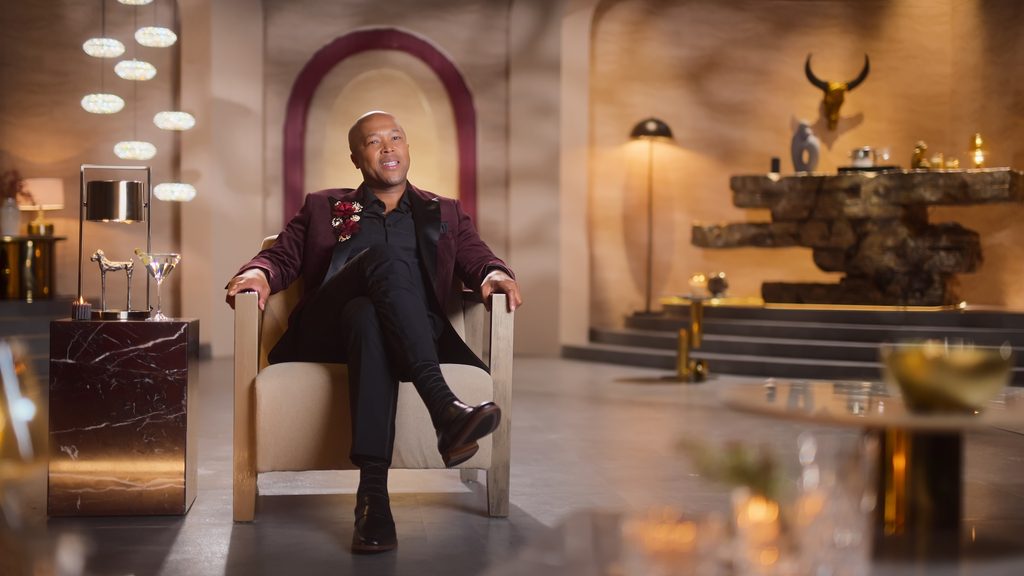
Buzza wants his mother there, not because the past did not happen and also not because the years of separation can suddenly be erased. But because he wants to experience one of the biggest moments of his life with both parents present. And that is where his softer side becomes especially visible. He is willing to have the difficult conversation. He is willing to meet his mother, and he is even willing to facilitate a meeting between her and his father in the hope of creating some understanding before the wedding.
The complication, of course, is that his mother has effectively been excluded from spaces where his father is present. She would prefer to attend after the main event rather than share that space, while his father is not prepared to accommodate that arrangement. This is a difficult position for a son to occupy. It is also important to recognise that the series gives us a particular perspective on this history. We can appreciate Buzza’s desire for reconciliation without deciding that one parent must be right and the other wrong. What stands out is his willingness to try. And perhaps that is one of the most moving things about him. He is not embarrassed by his emotions and in one episode we can witness him cry in front of his mother. He can express disappointment and still communicate love. All he wants is his mother to see him get married.
His sister, Dr Nangamso Nkonyeni, is another important figure in this family story. She represents a different relationship with the same history, and the differences in how siblings respond to an absent parent are worth observing without turning them into a competition over who loves whom more. Buzza’s willingness to reach out should not automatically become a standard against which his sister is judged. People experience the same family history differently. And that is precisely why the series deserves your watch.
Anele’s sisters: A wedding is not a family reunion
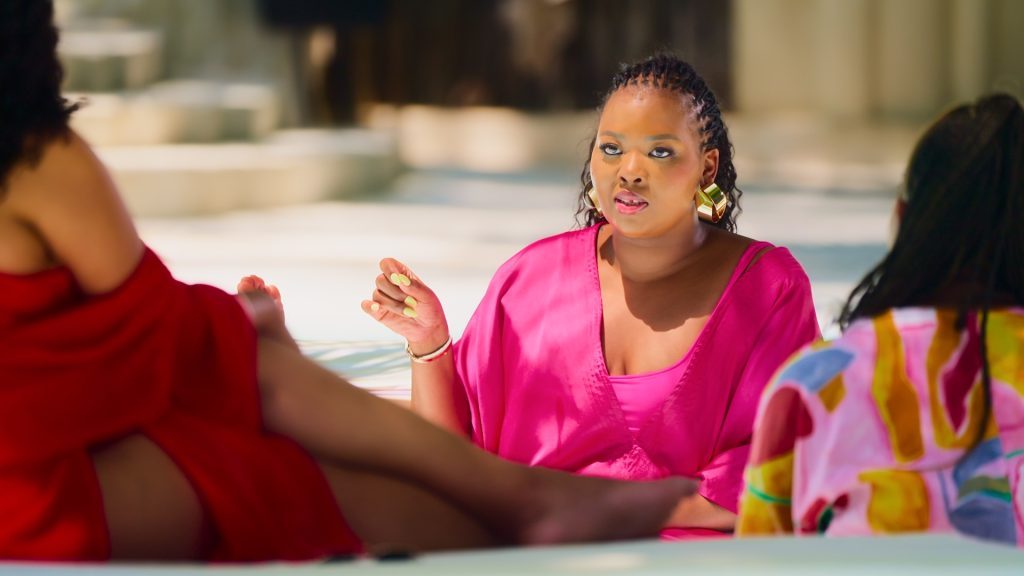
If Buzza’s storyline is about wanting to bring his mother closer to the family, Anele’s introduces a different perspective on family boundaries. Anele has three sisters, but they are not part of the wedding celebrations. During a conversation in her bridal party, she explains that she has not been close to her sisters and does not see their relationship being resolved in time for the wedding. Neo Nontso, who serves as her maid of honour, remarks on how long it has been since she has seen Anele and her sisters together.
Anele, however, is quite clear about where she stands. Her position is essentially that she has chosen to surround herself with the people she loves and the people who love her. Her sisters do not currently fall into that circle. She does not want to spend her wedding trying to repair relationships that have not been repaired over the years. And then comes the statement that gives the first episode its emotional punctuation: A wedding is not a family reunion. There is a lot to unpack here. Anele explains that, for the first time in her life, she is choosing to be selfish. Not selfish in the sense of disregarding everyone around her, but in the sense of allowing herself to have the day she wants without making it responsible for resolving every family issue. I actually think this is one of the more revealing moments in the series.
Anele is not asking the audience to understand the entire history between her and her sisters. She is telling us that the wedding is not the place where she intends to revisit it and we should respect that distinction. It would be very easy to turn this into a debate about family obligations, particularly in a society where family unity is deeply valued. But the show presents two different experiences of estrangement. Buzza wants to reopen a door. Anele has decided not to force one open. Neither storyline needs to invalidate the other. There is also an interesting parallel here: both are entering a marriage carrying complicated family histories, but they are approaching those histories differently. That contrast gives the series something more substantial than the usual wedding-preparation storyline.
The people who become family: Neo Nontso and the bridal party
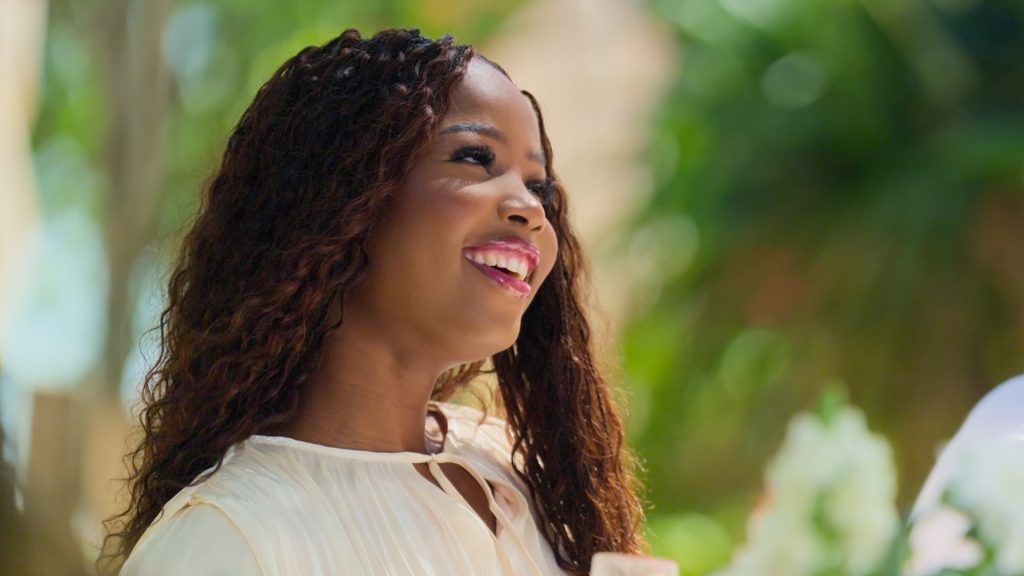
One of the lovely things about the series is that it gives the friendships some room to breathe. And Neo Nontso is an especially interesting person to have in Anele’s corner. For anyone who does not know her, Neo is a South African food entrepreneur, culinary content creator and cookbook author, known through her food brand, Dine With Neo. She was previously a celebrity makeup artist before building her food business and online following. Her career has included makeup artistry, food entrepreneurship, recipe development and publishing. She is Anele’s friend and maid of honour, and she brings a lovely energy to the bridal party.
Her conversation with Anele about her sisters is particularly revealing. Neo remembers a time when Anele’s sisters were part of the picture, and she acknowledges that she has not seen them together for a long time. It is a small exchange, but it helps establish that the people surrounding Anele have their own memories of her life. They are not just discovering her through the wedding. There is a difference between having friends who celebrate your milestones and having friends who understand the history behind them. And the Kenya bridal-party getaway is an opportunity for the series to explore these friendships beyond the actual wedding preparations. The women are given space to talk, laugh and reflect on their relationships with Anele. It also helps us understand why Anele’s definition of family is not necessarily limited to blood relations. Sometimes the people who show up consistently become the people you consider your family.
Buzza’s trusted groomsmen and one questionable bachelor party
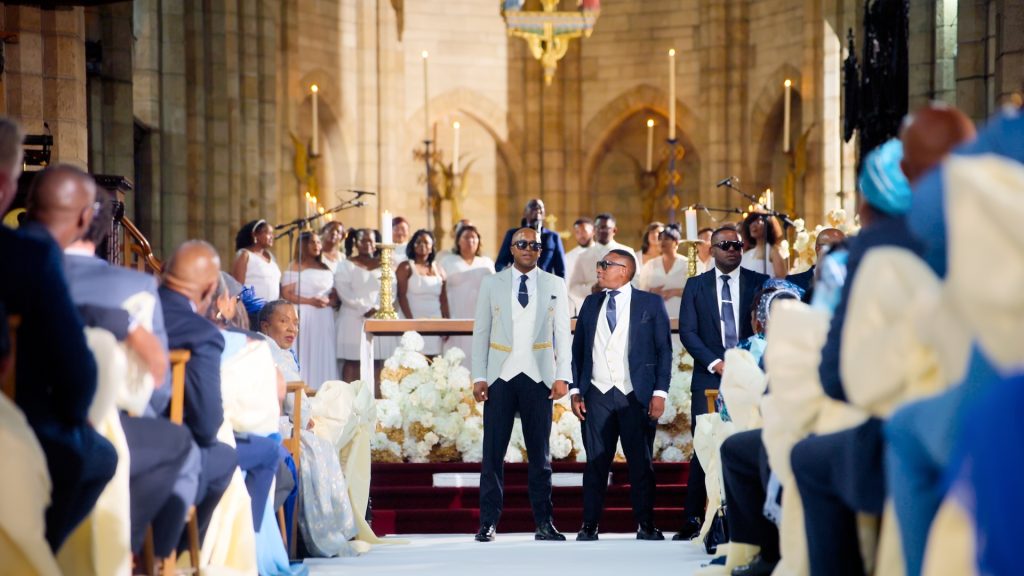
Now, if Anele’s bridal party gives us friendship, emotional conversations and a rather lovely maid of honour, Buzza’s groomsmen give us a different kind of entertainment. In the first episode, Buzza speaks about Lufefe Mayekiso as a man he trusts with his entire family. That is quite a declaration. You would imagine that such a man would be entrusted with a bachelor party of extraordinary proportions, and a memorable occasion. Something that would have the groom talking about it for years.
Instead, we get a bachelor-party situation that leaves a little to be desired and the contrast is hilarious. There is also Dr Mark Nasilo, Jack Devero, Sfiso Hero Mthethwa and Buzza’s brother Nujero Mgudlwa, known as Nuj, among the men in his circle. The series also features other friends and groomsmen, including Sfiso. The bachelor-party preparations are particularly amusing because the men appWho ear to have their own understanding of what constitutes an unforgettable send-off. At one point, the plans seem to involve Mark’s house, KFC, Stoney and watching sport. Now, there is absolutely nothing wrong with KFC and Stoney. In fact, some of us would happily attend. But when a man has promised to organise the bachelor party of the year, one might reasonably expect something beyond a television, takeaway and a comfortable sofa. Lufefe, my brother, the assignment was clear!
What makes this entertaining is that Buzza’s trust in his friends is not necessarily being questioned. Rather, the show finds humour in the difference between how seriously someone takes a responsibility and how seriously the person who appointed them expects it to be taken. The men can be trusted with the important things in life, apparently. The bachelor party? Well, that is another matter. And while we are laughing, there is something else worth noting: the series gives Buzza friendships that feel lived-in. The men tease one another, make promises and occupy a space in his life that is separate from his royal responsibilities and his relationship with Anele. That is important because a wedding is not only about the two people getting married. It is also a gathering of the relationships that have accompanied them along the way.
Mickey Klopper: The woman, the vision and the dome
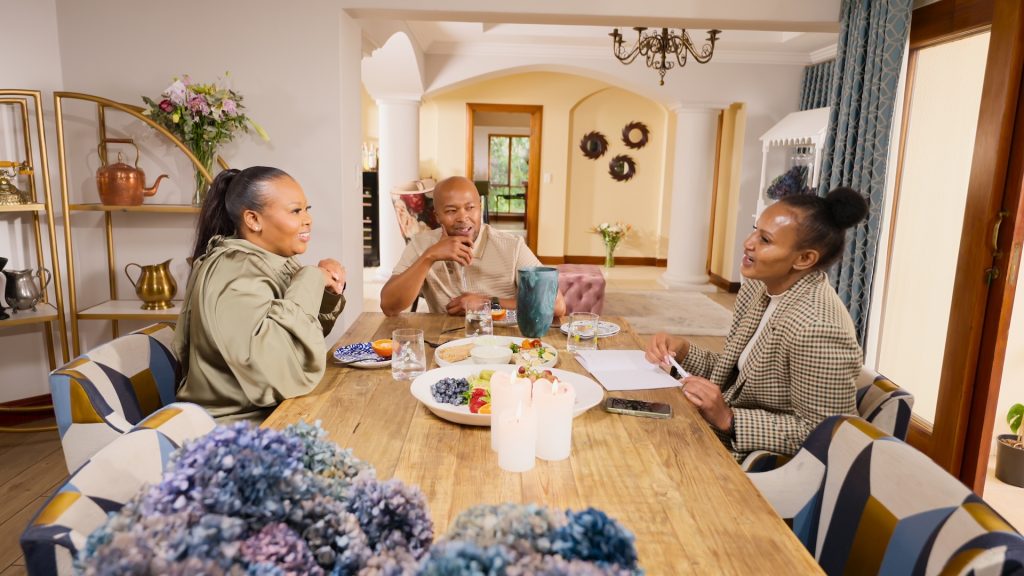
Now, let’s talk about Mickey Klopper. And perhaps this is where the series discovers one of its most entertaining supporting characters. She is the wedding-planning figure associated with bringing the couple’s ambitious wedding vision to life. I would be careful about attaching additional professional credentials or a detailed business biography to her without a reliable profile confirming them. What the series does give us, however, is enough to understand her role: she is the person navigating an ambitious event with numerous moving parts, suppliers, logistics, construction requirements and a couple who would quite understandably like to know what everything is costing.
And Mickey has a vision, a very expensive-looking vision. In earlier episodes we see a moment when Buzza expresses his confidence in her with the memorable sentiment: “In Mickey we trust.” And honestly, at that point, why wouldn’t he? The woman is planning a wedding that involves a magnificent dome in a vineyard. We are not talking about putting up a few gazebos, arranging some flowers and hoping the weather behaves. We are talking about a substantial structure that needs to be erected, with heavy materials, specialised equipment and a construction operation that has to work around the venue’s restrictions. The dome is effectively the visual centrepiece of the wedding vision.
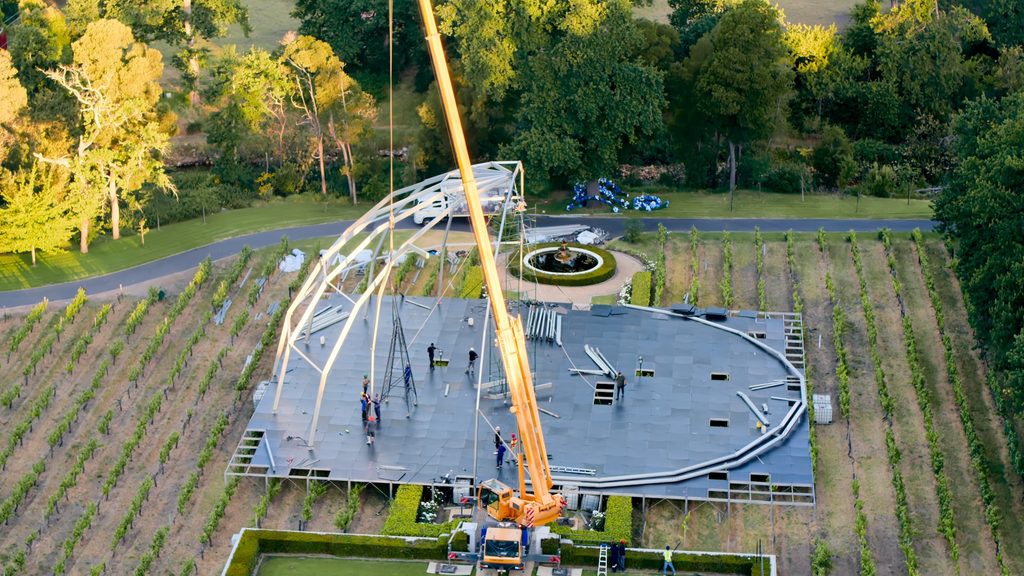
Technically, if the structure is the spherical or curved lattice design, the term to use is a geodesic dome. The metal framework is the structural skeleton, which has to be assembled and secured before the covering and final decorative elements can be completed. And suddenly, wedding planning starts looking a lot like a construction project. The venue manager has made it clear that vehicles cannot simply drive across the grass. Understandably, nobody wants heavy machinery damaging a vineyard. But Mickey needs a crane to get the structural materials and equipment into position.
So now we have a wedding planner negotiating with a venue manager, construction equipment needing access, a massive structure waiting to go up and a couple who are probably beginning to wonder whether their wedding venue has become a building site. I love the way the show builds this particular storyline because it gives us something to anticipate beyond the emotional family conversations. There is a practical question hanging over the production: will the wedding vision actually come together? Mickey’s confidence is one thing but the logistics are another. And then there is the money. Because every time another ambitious idea enters the conversation, Anele and Buzza have the same perfectly reasonable question: how much is this going to cost?
After two episodes, continue streaming or skip?
There is a particular softness to Stars & Vows: Anele & Buzza that I did not expect to find beneath all the wedding planning. Yes, there is money. Yes, there is a grand vision. Yes, there are conversations about the budget that make you wonder whether Mickey has accidentally added another zero somewhere.
But underneath all of that is a couple trying to create a meaningful beginning to their married life. And they are doing so while navigating the realities that many families understand: estrangement, complicated parental relationships, friendships that become family, children, cultural expectations and the difficult business of deciding which relationships deserve space in your life. I am particularly drawn to the difference between Anele and Buzza’s approaches to family. He wants to bring his mother closer. She is comfortable proceeding without her sisters. Neither needs to become the villain for the other person’s experience to make sense.
That is the conversation I would rather have about this show. We are not here to decide whether Anele should have invited her sisters or whether Buzza should push harder for his mother to attend. We are here to understand what the series tells us about these people, the decisions they make and the emotional realities behind a wedding. And perhaps that is the greatest strength of the first two episodes: they remind us that the wedding is not necessarily the happiest or easiest part of getting married. As for Mickey, we are still waiting for that dome.
Watch Stars & Vows: Anele & Buzza on Netflix. It is a wedding story, yes, but it is also a story about the families we are born into, the families we choose, and the people we decide to take with us into the next chapter. I’ll be back with Part Two of the recap, where we pick up the wedding preparations, follow the unfolding drama and find out whether Mickey’s grand plans finally come together.
Also Read: