Roberto Kyle talks about his directorial debut Genoeg
The countdown to the 14th kykNET Silwerskerm Festival has begun, with audiences set to experience a powerful line-up of Afrikaans storytelling in Camps Bay, Cape Town, from 19 to 22 August 2026. Among this year’s anticipated short films is writer-director Roberto Kyle’s emotionally charged debut, Genoeg. a moving exploration of identity, forgiveness and the enduring bond between a father and son.
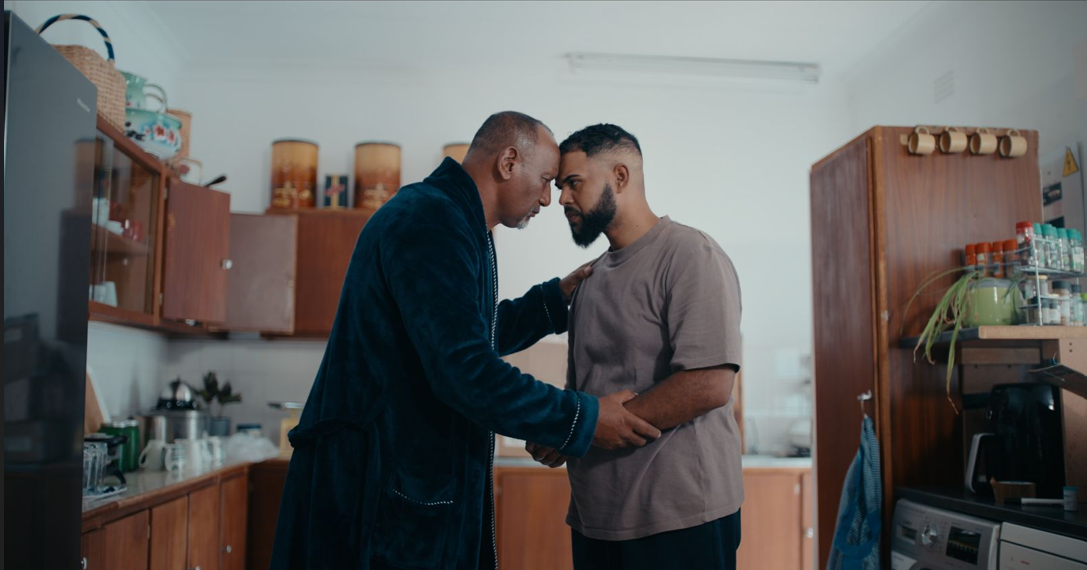
A father and son come face to face again years later after the son was cast out of his home due to his sexuality. The short film Genoeg examines a complex relationship in a moment in which the young man faces his bewildered father, who is lost in the shifting world of Alzheimer’s disease.
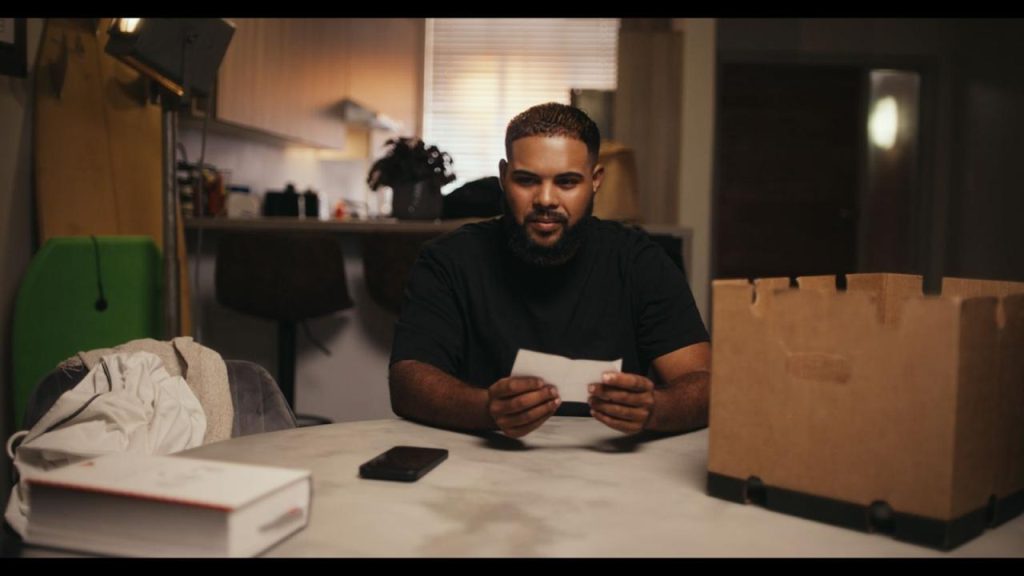
His father (Zane Meas) fails to recognise Marc (Ayden Croy) and instead confuses him with Marc’s brother, who passed away at a young age. Marc lets his father be – suddenly standing before the judgemental father as the beloved son. The past and present merge, and finally within the confusion Marc is truly seen, called by his name.
Genoeg makes its debut at the Silwerskerm Festival, which takes place in Cape Town from 19 to 22 August. In this interview, writer-director Roberto Kyle speaks about the film, and more.
“Genoeg” is a far more nuanced word than one might think. How do you play with its meaning by using it as a title?
“Genoeg” can mean “enough of something”. It implies – for me – that something has come to an end, that a door is being closed, or that one is walking away from something or someone. It is something that happens from outside yourself… Rarely do we turn the lens on ourselves, check in on ourselves – it is not often that we ask ourselves, or rather remind ourselves, that we are enough, or can be enough.
It depicts a complex relationship between a father and son – yet you describe the film as a love letter to your father. How so?
I lost my father to cancer in my second year of university, in 2013. It was during my student years that I began to learn a great deal more about myself and began to accept myself for who I am. I always felt that my father somewhat resented me because I was not the type of son he wanted. He never said it to me in so many words, but sometimes I could sense it. My father was super masculine and emotionally hardened – very different to who I am. The older I grew and the more aware I became of the different time and circumstances my father grew up in, the more empathy I developed. Just because he did not have access to a certain language – certain ways of expressing himself – does not mean he was any less of a father. This film represents the soft, safe place that I hope we – my father and I – could have, would have, been for each other today, had he still been alive. It pays a kind of tribute to the men who never had the opportunity to tell their own sons: “My child, you are enough.”
Given that the father suffers from Alzheimer’s disease, memory plays an important role. Tell us more – also how you employ it thematically, and how the confusion specifically helps to build a bridge between father and son.
Memory is in fact used a great deal as the film’s “action mechanism”. It drives the story forward. The confusion is a source of pain for Marc, because it actually serves as a reminder of what he – or who he – could not be for his father. Until the confusion becomes clarity – and a bridge appears…
You refer to the use of a unique cultural and linguistic voice. Please elaborate, especially with regard to concepts of identity and so-called masculinity.
I think a person’s culture and a person’s language are two of the most important defining characteristics of a person’s identity. They distinguish general experiences from unique ones. And that is what people want to see. Something unique. There are unique moments in the film that directly comment on how we view masculinity – how we view being Coloured, how we view being Afrikaans. I think that is why it will affect people – because they will be able to see a great deal of themselves in the film. The beauty. And the ugliness.
Apart from a few brief flashbacks, this is almost like a two-hander on stage. How did you approach it cinematically, and what were the challenges for the actors?
Genoeg is the first screenplay I have written – a massive learning curve. I think the reason it can largely read and come across as something that could work on stage (and I believe it can) is because I attended UCT’s drama school. I have a BA Honours in theatre and performance, and I think my training spills over significantly into my creative process. I think deeply and at length about what I want people to see – and at drama school, that was always something on which directors (the lecturers) would focus. We were taught that “meaning” does not only need to be conveyed through words, but also through how the picture is composed on the stage. Genoeg relies greatly on the silences – and those moments must still be able to move the story forward. That was quite a challenge for me, and I think for the actors too. The actors were awesome, BTW!
You are known as an actor – including in Arendsvlei and Binnelanders – and as a singer. Are there other projects you want to take on behind the scenes?
Look, I currently want to do EVERYTHING. I want to act, write, and direct – and right now I am doing all three. (That is all I can say about this for now…)
Anything else you would like to share with viewers?
I think there are stigmas surrounding masculinity that we do not talk about nearly enough. Too little space is given to the young boy to simply be himself. In a world in which they struggle to conform to one specific thing, we do not make enough room for that child to authentically be himself. I would like viewers to sit and reflect afterwards on how they navigate and view the world of masculinity. And then ask themselves: “But why?”
*The 14th kykNET Silwerskerm Festival takes place from 19 to 22 August in Camps Bay, Cape Town. Tickets for the films, as well as the prestigious awards ceremony on Saturday, 22 August, are available at Quicket.
For the full programme, visit www.silwerskermfees.co.za.