
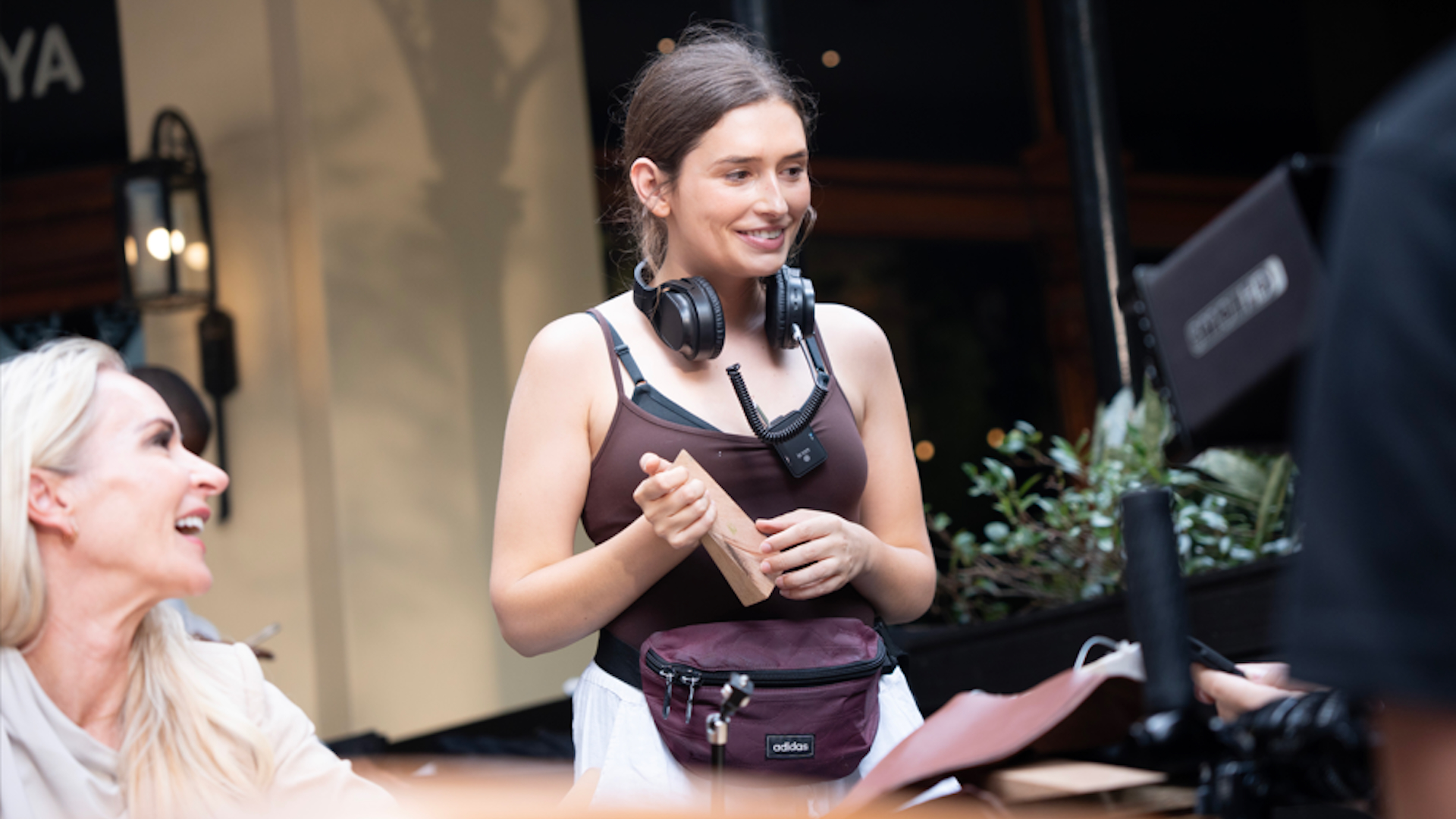
Frances Sholto-Douglas talks about her director and writer debut with ‘Change.’
As anticipation builds for Silwerskerm Festival 2026, taking place from 19 to 22 August in Camps Bay, audiences can look forward to a showcase of exceptional Afrikaans filmmaking, with a line-up celebrating powerful stories, fresh voices and some of the best talent in South African cinema. Among the films set to make an impact is Change., a short film that takes viewers on a rollercoaster ride from the perspective of a two-rand coin.
Through the journey of an R2 coin changing hands, Change. offers a thought-provoking reflection on class differences, human connection and the changing realities of life in South Africa. Offering a unique glimpse into the lives of urban South Africans, the film explores the value of money and the different meanings it carries across society. Each character represents a different socio-economic class, revealing how what you carry in your pocket or don’t can say far more about you than you might think.
Writer-director Frances Sholto-Douglas discusses the film, the city of Cape Town and more.
You make your debut as screenwriter and film director with Change. Where does the leap from acting to writer and filmmaker come from?
Expanding into writing and directing has felt like a natural progression for me. Earlier in my acting career, it felt important to focus solely on performance. I didn’t want to divide my attention between too many creative pursuits. But now I find myself in a good place to begin branching out in meaningful ways, and I feel very fortunate that I have been given the opportunity to do exactly that.
Why a story about cash and small change that is disappearing? Are you not from the generation that advocates for a cashless world?
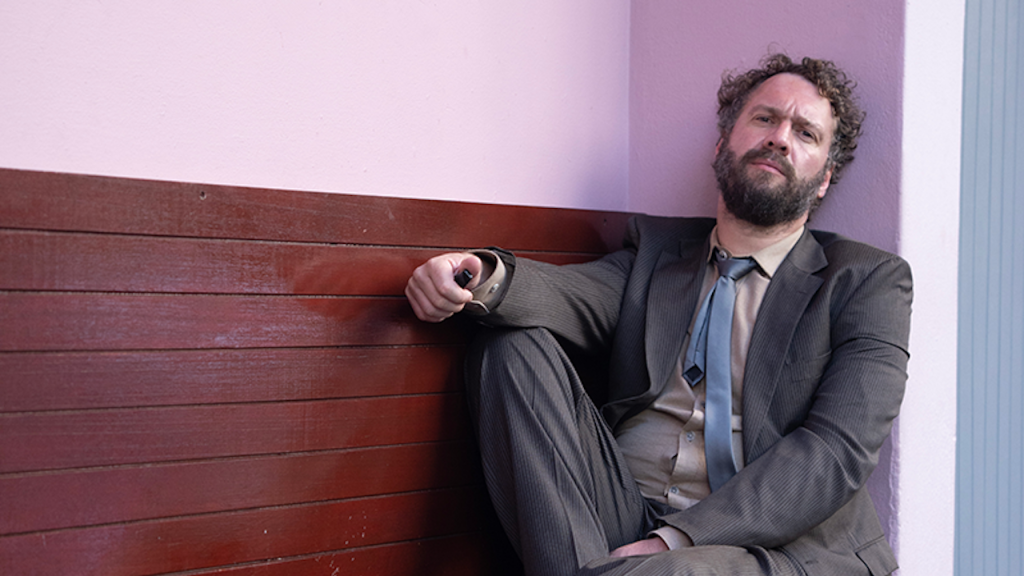
Cash is a huge part of South Africa’s economy, particularly for lower-income consumers. So, there is an element of classism when a business chooses to go cashless. Many coffee shops, clothing stores, and restaurants in Cape Town have gone cashless. With Change., I wanted to explore the idea of a much larger business going cashless while demonstrating who that might impact and why a cashless coffee shop doesn’t operate in isolation from a spaza shop around the corner. That being said, I am sure my personal history with coins comes through in the script, having grown up with the tooth fairy and ten-cent Chappies bubble gum. I think it’s magical that one coin can travel so far and be carried by a diverse range of people who have very little idea of where it has been and what it will mean to the next person who gets it.
The story is told from the perspective of an R2 coin. This has a significant influence on the camerawork. Please elaborate.
Our goal was to ground the audience in the coin’s point of view, which meant tight spaces and dynamic movement. We as the audience need to feel unnoticed, small, and constantly in motion. Using a macro probe lens and a 360 camera was essential in bringing this vision to life. The probe lens allowed us to feel our size as a two-rand coin and move in and out of small spaces with ease. Refusing to cut away from this perspective, we as the coin are both voyeuristic and non-judgemental – connecting with the characters we come into contact with while maintaining detachment. The 360 camera allowed for the rolling effect you see at multiple points in the film – letting the coin spin and bounce around in a world that is moving too fast. Working with cinematographer Werner Botha was a dream; in addition to his technical skill, he was open-minded and willing to go the extra mile to achieve extremely tricky shots. We also had a lot of help from our set designer, Natalie Fraser, in achieving seemingly impossible angles, building everything from a pocket rig to a storm drain.
Cape Town is almost a character in its own right. Is it your hometown? How do you make use of Cape Town and its people?
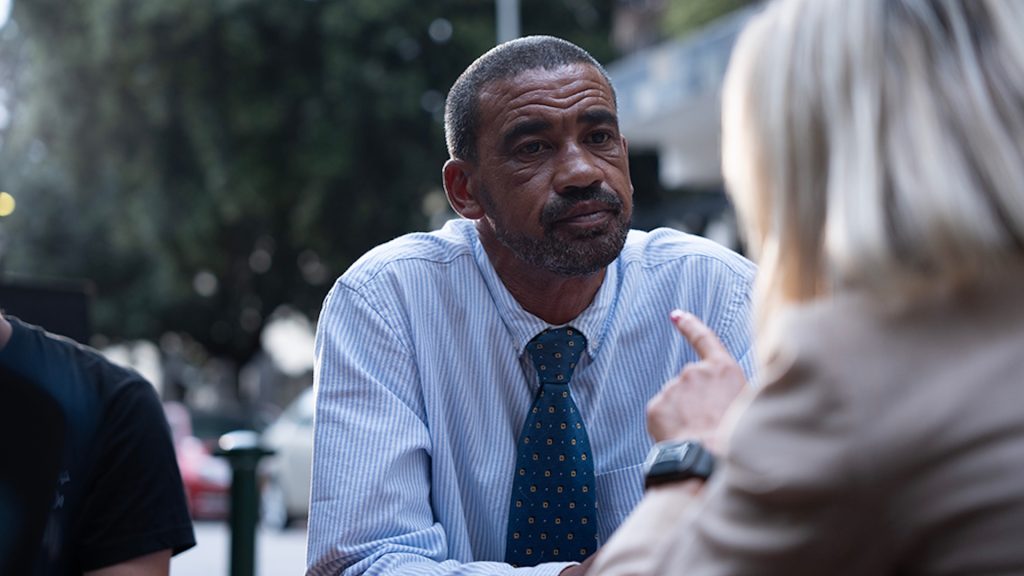
I am so glad it comes across that way. Yes, I grew up in Cape Town and have lived here my whole life. I have a complicated relationship with the city, which is known for its spatial apartheid and wealth disparity, and with my own role in the city. In a way, this short film is part of my reckoning with this city and my journey to figure out my place in it.
Tell us more about the music.
Initially, I planned on letting the city soundscape “score” the film. I believed that the musical composition might distract from the unemotional, unbiased perspective of the coin. Thankfully, the highly acclaimed film composer Edward George King proved me wrong later in the process. His score provided a “voice” for the coin that completely transformed the film.
Do you have small change in your wallet?
I currently have cash under my phone case and a few coins on my bedside table and yes, one of them is a two-rand coin.
I believe you are already working on your next screenplay. What is it about and what are the plans for it?
I’ve been writing a coming-of-age screenplay over the last few years, and I have a few short films ready to go. I am keen to make another short film in the near future, and ultimately I would like to finish writing my screenplay and direct it as a feature film. I was incredibly lucky to get this opportunity to make Change. It has been one of the most rewarding experiences of my life.
*The 14th kykNET Silwerskerm Festival takes place from 19 to 22 August in Camps Bay, Cape Town. Tickets for the films, as well as the prestigious awards ceremony on Saturday, 22 August, are available at Quicket. For the full programme, visit www.silwerskermfees.co.za.
The film is produced by Casey Diepeveen under Holding Thumbs Productions, with Ydalie Turk serving as executive producer. It marks Frances Sholto-Douglas’ debut as both director and screenwriter, with editing by Canya Cruywagen, cinematography by Werner Botha, and an original soundtrack/score by Ed King. The film stars Brendon Daniels and Laudo Liebenberg and is set for release in 2026.
Also read: