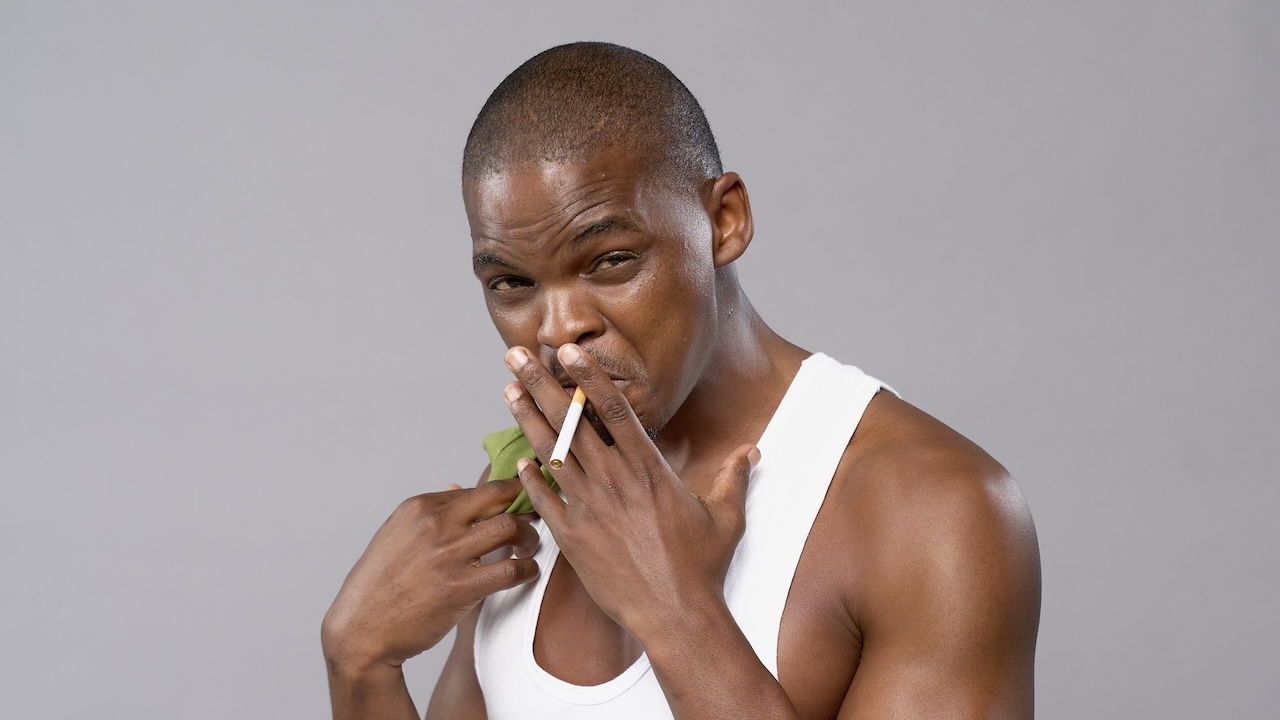
Anele Nene on embodying Democracy in e.tv daily drama eGagasini: Waves of Change
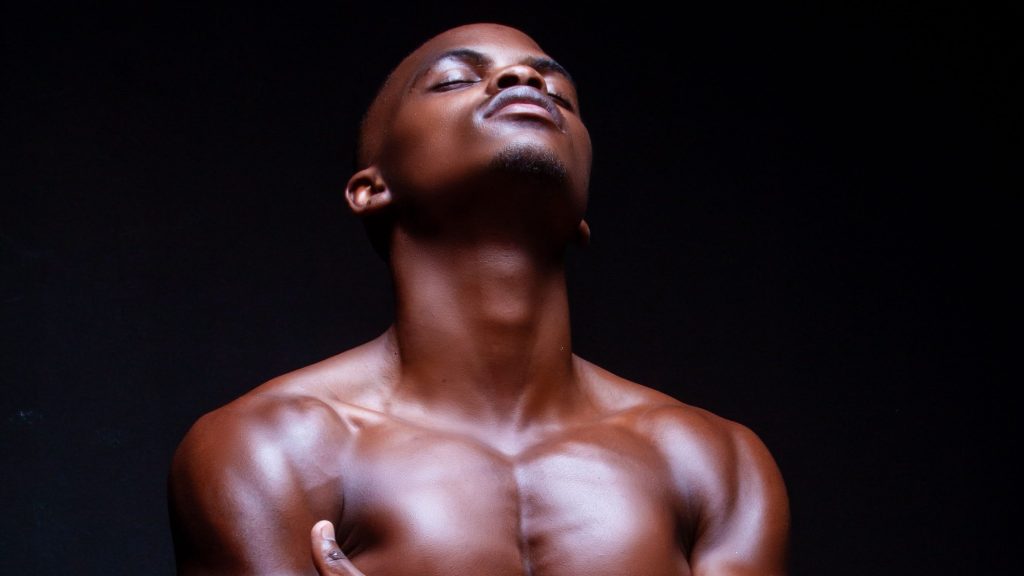
Fresh off memorable appearances in Mzansi Magic hits such as Shaka iLembe Season 2 and iThonga, the Durban-born actor Anele Nene is showcasing his full range in eGagasini: Waves of Change, where he takes on the complex role of Democracy, a young man shaped by loss, survival and the desperate search for belonging. The series airs Monday to Friday at 19:30 on e.tv, with new episodes readily available on eVOD after airing on channel.
The role marks another defining moment in a journey that began on stage. A theatre enthusiast at heart, Nene’s career was built through theatre training before he transitioned into television, where he continued sharpening his craft through experiences such as working on the historical epic Shaka iLembe.
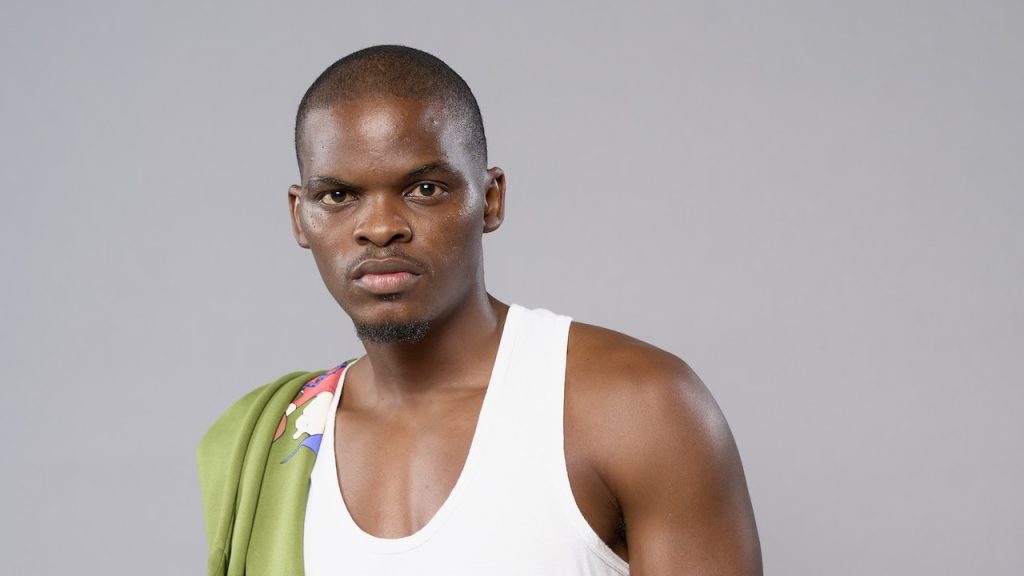
In eGagasini: Waves of Change, Nene plays the role of Democracy, a young man caught between survival and self-destruction. Haunted by the loss of his father and desperate to find his place in the world, he is drawn into a life where crime, loyalty and reputation become his way of searching for belonging. Set against the vibrant backdrop of Durban’s evolving music scene, eGagasini: Waves of Change follows three ambitious best friends from Umlazi whose dreams of making it big are suddenly within reach. But as their careers begin to soar, one devastating night changes everything, forcing them to protect a secret that could destroy their future.
In this exclusive interview, Anele Nene opens up about becoming Democracy, transitioning from theatre to television and the lessons that continue to shape his journey as an actor on the rise.
Firstly, congrats on yet another exciting role in eGagasini: Waves of Change. To kick off the chat, how would you describe your character on eGagasini?
Democracy is someone who comes from the township. I’m a township guy myself, and I remember watching a documentary about what’s happening on the Cape Flats, and it really made me reflect on some of the realities people face.
The character of Democracy is one of those that come up often when people talk about why young people become gangsters or join gangs. A lot of the time, it comes down to a sense of belonging. People are looking for somewhere to fit in. They want to feel accepted and seen. What’s crazy is that even criminals can feel seen when they commit these crimes. Suddenly, people are talking about you for weeks because you’re part of a gang that carried out a big heist or something that gained attention. In that world, democracy finds a sense of validation from being seen as this “cool kid” but the reality is that he’s surrounded by people doing the wrong things. So Democracy represents thousands of young boys in townships who end up caught in gang violence and criminality, not necessarily because that was their dream, but because they were searching for somewhere to belong.
What was your first reaction when you read the script?
I remember where I was when I got the opportunity. We also had to send in a self-tape. I read these small snippets from the script, it was only about a page and Amanda Seome with Terrence Maphumulo helped with the self-tape. We were together on Shaka iLembe, so they helped read the other characters in the script. We went through the material, trying to find the heart of the character because I always look for colour and texture in a role. We spoke about it, explored different ideas, and that’s when we started finding the layers in this character.
For me, Democracy is a very diverse guy. He’s someone who sells drugs across different environments, so he’s versatile. He’s not just a typical “hood guy”. If you put him in a suit, he can fit into that world too. He can move through different spaces, he can speak English fluently and there are all these different sides to him that we’re still exploring. So when I read the character, my brother, I was so excited because this was something I had always wanted to do. I wanted to show people what it feels like, what it looks like, and share something that I personally understand because of what I survived. At one point in my life, I was part of a gang in the township because I wanted to belong. I wanted to fit in. I didn’t want to be the person who was singled out or accused of not being part of something. So when this character came to me, I thought, “Finally, I get to do this.” Finally, I get to tell a story that comes from a place I know and bring that experience to life.
What I like about storytelling is that now and again, you’re gonna stumble upon scripts that you’ve always prayed for and you actually apply some of the things you’ve learned throughout. I know that eGagasini is also shot in KZN. How special has it been to be able to tell the story at a place that you’re coming from?
There’s something I read from a book, I think it’s from ‘The Alchemist’ where the author says that when you truly want something, the universe conspires to help make it happen for you. I believe that whatever you put your mind to, whatever you believe in, the universe will create the space for it. If you believe you belong to a tribe, the universe will give you a tribe. If you believe you’re destined to be among the greats, the universe will give you experiences that move you towards greatness. And I say that because, playing this character, a Durban boy from Umlazi, there’s an energy that comes with it. My brother, there’s something about it that’s difficult to explain. That energy means you don’t have to force too much. Shooting the project in Durban was amazing. I think it was important for Stained Glass Productions to shoot it in the actual environment because the energy is already there.
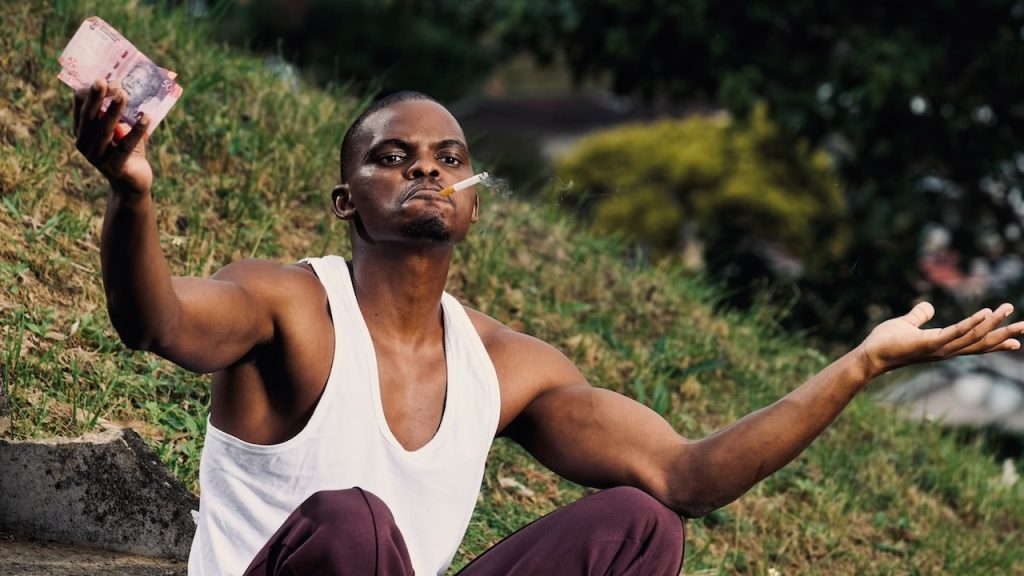
Even the people watching you while you’re filming, looking from their windows or standing on the side of the streets, they know. When you’re acting out something they’re familiar with, you can feel that connection. They recognise it. That’s what I love about acting. When people watch the screen, I want them to say, “I know someone like this.” I want them to recognise that person because they’ve seen them, they’ve lived around them, they understand them. As an actor, I have to honour that. I have to be able to play that reality and capture that truth. I don’t know exactly how they thought about it when choosing to shoot there, but for a creative person, it’s an incredible boost to have that environment, that energy, and that authenticity around you.
It’s beautiful, man. Even for someone like me who has only been to Durban once, you can’t help but notice that the place itself becomes a character.
The streets have their own connection with you. You feel like you’re telling a story that happened right there. When you’re standing on a certain corner or in a particular location where a scene is being shot, you can feel the presence of the place. There was one scene we shot that was incredible. I remember standing there and feeling the energy of the environment. What was even more interesting was that some of the people passing by were saying, “This is actually what they do on this street.” They were recognising the reality we were portraying. And that’s what makes it special. The city itself, the township itself, has an energy. It’s almost like a living being, a character in its own right. I’d even go as far as saying it’s part of the supporting cast. It helps you bring the story to life.
And now obviously, eGagasini and some other shows like Shaka iLembe and movies that you have done. How has the journey been for you, someone who comes from theatre to now doing TV? How is the shift?
It was quite an experience, especially because I’m a theatre junkie. My foundation has always been theatre. That’s where I started, and I consider myself one of Debbie Lutge’s students. Debbie is one of the greatest theatre professors in Durban. She’s the person who trained many of the Durban actors you see today, people like Dawn Thandeka King, Sdumo Mtshali, Wiseman Mncube, and many others. A lot of the actors coming out of Durban have been influenced by her training.
One of the beautiful things about working in Shaka iLembe was the advice they gave me when I first arrived. Wiseman Mncube and Khabonina Qubeka sat me down and said, “This is going to be an intense set. The world of the show is alive. The environment is alive. The sound is alive. Everything around you is working to connect with you.” They told me the best thing I could do was pray before I started working. Those lessons helped make my transition from theatre to television much smoother. There wasn’t a huge adjustment because the biggest thing they taught me was: go within. In theatre, you project. You have to reach the person sitting at the back of the room, so everything has to be bigger and more visible. But with television, you don’t go outward, you go inward. The audience wants to see what’s happening inside you. They want to see what’s beneath the words, what your thought process is, what you’re feeling in the moment, even if it isn’t written in the script.
They helped me understand that, and I’m incredibly grateful for those lessons.
I know you touched on it a bit but were there specific people you drew inspiration from when bringing Democracy to life, or was it mostly built from your own experiences growing up in that environment?
A lot of it came from my own experiences, but I’ll be honest and say I also borrowed heavily from people I met when I moved to Inanda, which is known as one of the areas with a high rate of crime in Durban. Being in that environment exposes you to different kinds of people and different realities. So I borrowed a lot from the guys I knew there. I’d also say some of it came from my cousins, many of whom have passed away, because they were involved in things like the drug business and other activities that are part of that world. There was also one of my friends who was a very interesting person. He knew a lot about people in the hood, things that he probably wasn’t supposed to know. He understood the environment, the people, and the dynamics around him. So I pulled from those experiences and those people, but I also brought my own understanding into the character.
Without giving away any spoilers, what do you hope audiences understand about Democracy after watching the show?
I think the biggest thing I want audiences to understand is that Democracy is just human. I know it might not be what people expect when they first see him, but underneath everything, he’s a person who is trying to survive. Democracy is stuck with his grandmother, who is still asking questions about his father. Then his grandmother passes away, and suddenly he’s completely alone. Democracy has nobody. When I got onto set, that was something I kept coming back to, this idea that Democracy is just trying to find a way out. You look around and you see families together, people with support systems, and then you realise that this character doesn’t really have that.
That helped me understand him better. Whatever decisions he makes, whatever mistakes he makes, he’s making them on his own. He doesn’t have someone he can turn to and say, “I don’t have money for bread,” or “I need help.” He’s literally left in that house by himself, trying to figure life out. And probably the greatest thing he has is the stories people tell him about his father. People are always saying, “Your father was dangerous. Your father was someone nobody messed with.” That becomes his only reference point. That’s the only image of greatness he has. So in a way, he’s trying to find something that connects him to his father, trying to become something close to the man everyone keeps telling him about.
The cast is led by Meshack Mavuso Magabane and Gugu Gumede alongside Nolwazi Tsebesha, Aphelele Shezi, Londeka Mkhwanazi and Nomfundo Radebe. The cast also includes Ntando Mncube, Duduzile Ngcobo, Mduduzi Nombela, Anele Nene, Zanele Zulu, Pinky Mjwarha and Sibonakaliso Mazibuko.
eGagasini: Waves of Change is produced by Stained Glass TV, with Gugu Zuma-Ncube and Pepsi Pokane serving as producers.