
Umthetho Review: Is it worth watching?
A new South African drama has taken Netflix by storm. Since dropping on Friday, Umthetho has quickly become one of the biggest talking points on social media, shooting straight to the number one spot on Netflix’s Top 10 Shows in South Africa. The seven-episode crime drama has also claimed the top spot in Kenya and Nigeria, putting this homegrown thriller firmly at the centre of the conversation across the continent.
Produced by Black Brain Pictures, Umthetho is adapted from the acclaimed Brazilian Netflix crime drama Brotherhood (Irmandade), but the South African version relocates the central conflict into a world shaped by its own prison politics, institutional corruption and family pressures. Netflix’s official logline describes it as the story of a young public prosecutor pulled into a brutal prison syndicate led by the brother she thought she had lost, forcing her to choose between justice and family, law and survival, truth and betrayal.
And once you have watched the whole thing, that description feels almost deceptively simple. Because what Umthetho is really interested in is how quickly a person can compromise their principles when protecting family becomes a matter of survival.
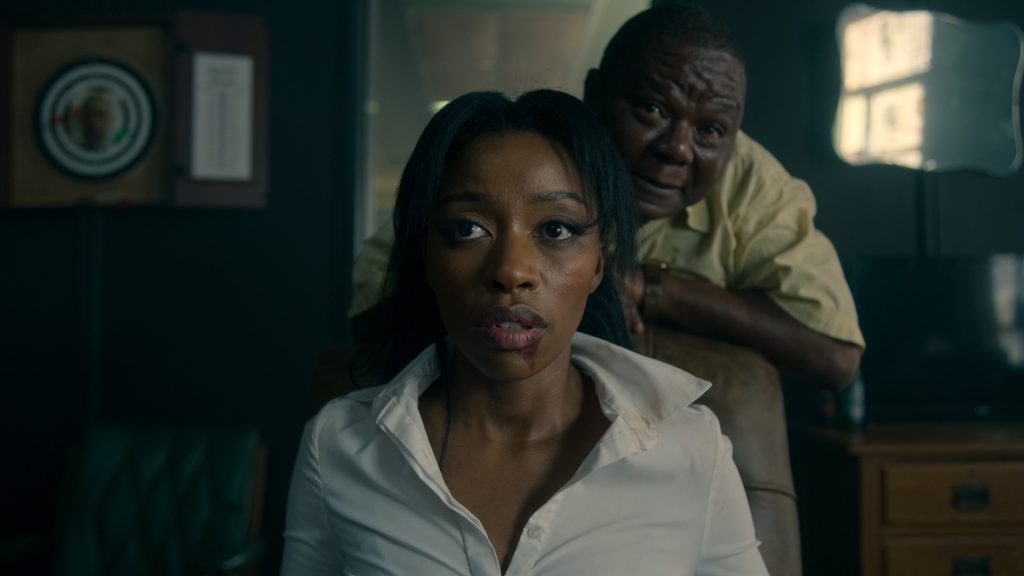
On the surface, Netflix’s South African crime thriller has familiar ingredients: a prison syndicate, a corrupt official, crooked cops, informants, shifting alliances, torture, betrayal and a protagonist forced to operate on both sides of the law. None of these ingredients is particularly new. Television has been putting them together for decades. But Umthetho understands something important about the crime thriller: sometimes the most dangerous place for a character is not prison, the courtroom or the criminal underworld. It is the space between what they believe and what they are willing to do for the people they love. That is where the series finds its strongest material.
*Spoiler warning: This article contains major spoilers for Umthetho, including the ending.
Nqobile Nunu Khumalo walks straight into the fire
The first thing Umthetho gets right is its casting.
Nqobile Nunu Khumalo is convincing from the moment she appears as Mbali Dlamini, a public prosecutor who seems to have built her life around order, discipline and the belief that the law means something. There is confidence in the way she plays Mbali early on. She is not introduced as somebody waiting to be saved. She is a professional who knows her job and understands the system she works within. Then the system turns around and swallows her.
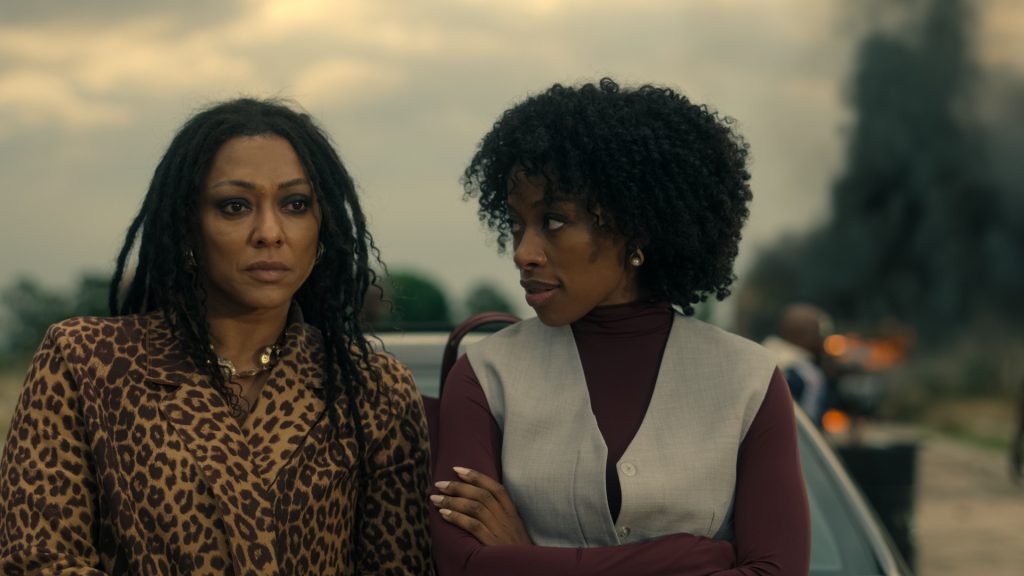
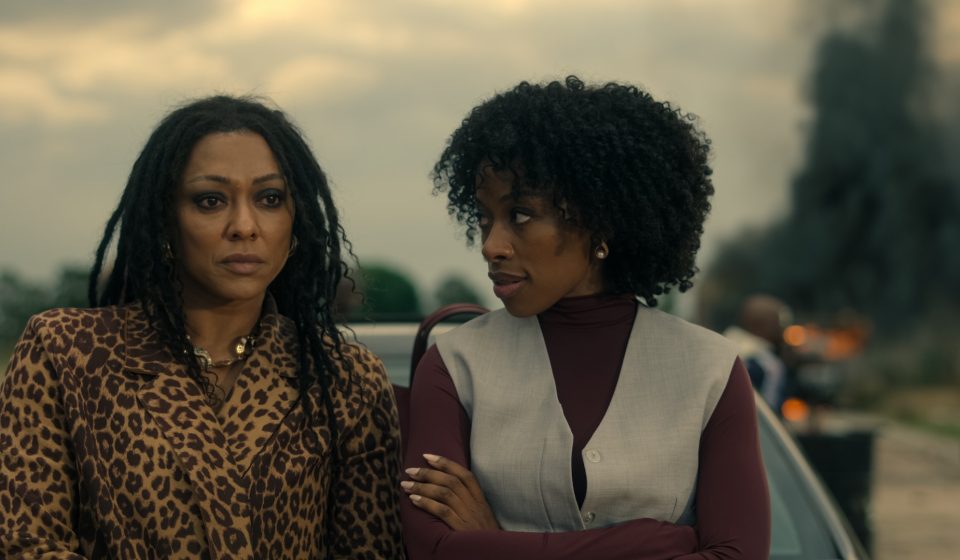
Just after winning a case, Mbali is approached by Crystal, played by Lorcia Cooper-Khumalo, who hands her a collection of files and asks her to take on a case involving her brother. Except there is one enormous problem: Mbali believes her brother is dead. That revelation immediately changes the temperature of the series. Moses is not simply a missing relative returning to the story, but he is a man who has spent years inside prison and has become a powerful figure within its criminal hierarchy. Mbali has to reconcile the brother she remembers with the man standing in front of her now. That is where Khumalo’s performance becomes particularly compelling.
There is something increasingly interesting about the kinds of roles Khumalo has taken on throughout her career. She has portrayed women placed inside impossible situations, forced to confront systems of violence, corruption, betrayal or injustice that are significantly larger than themselves.
We have seen it before. In Uncovered, she played Aluta, a woman who takes up her sister’s investigation into a mining conspiracy that could implicate her own employer. In Nqobile, she played an abused wife who ultimately turns the tables on her husband. In Red Ink, she played Lucy Khambule, a journalist-turned-publicist who becomes dangerously entangled with an imprisoned serial killer while pursuing the story of Napoleon Dingiswayo, eventually uncovering a conspiracy that puts her life at risk. There is a clear through-line here. Khumalo has an ability to inhabit characters forced to navigate situations that feel almost impossible to escape. These are women whose moral certainty is tested by circumstances that refuse to offer clean answers. Umthetho continues that streak. But this time, the conflict is even more personal. Mbali is not fighting for an abstract idea. She is fighting for her family, and that distinction matters.
Mbali’s transformation is the real story
The most compelling thing about Umthetho is not necessarily the prison gang itself but watching Mbali transform throughout the series. At the beginning, she sees Moses through the prism of his past. She knows what he has done and also knows what the law says about people who commit crimes. As a prosecutor, she has built her identity around the belief that breaking the law must have consequences.
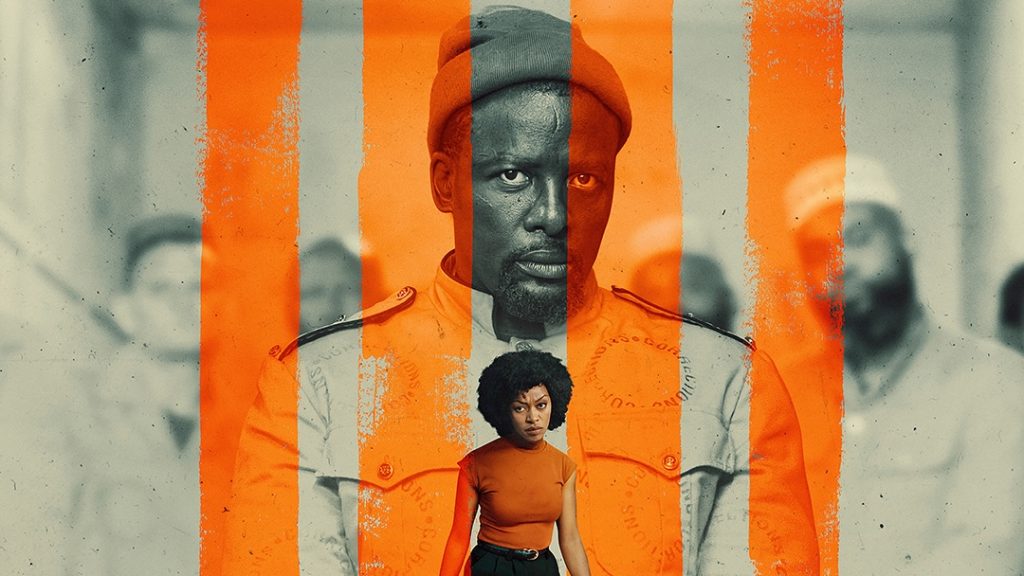
Then she discovers that the man she thought was dead is alive. Worse, he is trapped inside a system that is itself breaking the rules. The prison is full of illegal methods, tortured inmates, irregularities, intimidation and people operating outside the law. Agnes Khoza, played by Sindi Dlathu, is at the centre of that machinery, with Detective Bennet Tau, played by Molefi Monaisa, operating alongside her.
Suddenly, Mbali’s understanding of justice becomes much harder to maintain. This is where the show asks its best question: What do you do when the law is no longer enough to protect the people you love? Mbali’s answer changes throughout the season. At first, she tries to work within the system. Then she manipulates it until she eventually crosses a line she cannot simply uncross. The show is not saying that Mbali’s choices are necessarily right. It is showing how a person can be pushed into making choices they once believed were impossible. Almost every decision she makes creates another problem. If she follows the law too closely, she risks losing her family. If she becomes too close to Moses’ criminal world, she risks losing herself. There is no clean exit.
Tony Kgoroge makes Moses impossible to ignore
Tony Kgoroge is one of those actors whose presence does a lot of the work before he even speaks. As Moses, he brings an authority that does not depend on constant shouting or theatrical intimidation. Moses has spent 14 years in prison and his release is supposed to be imminent, but Agnes has other plans. She arranges for another inmate to attack him, but Moses survives and beats the prisoner. Then she takes things further. A prisoner is brought into Moses’ cell and killed. The knife is thrown to Moses, making it appear that he committed the murder. His parole is gone, just like that.
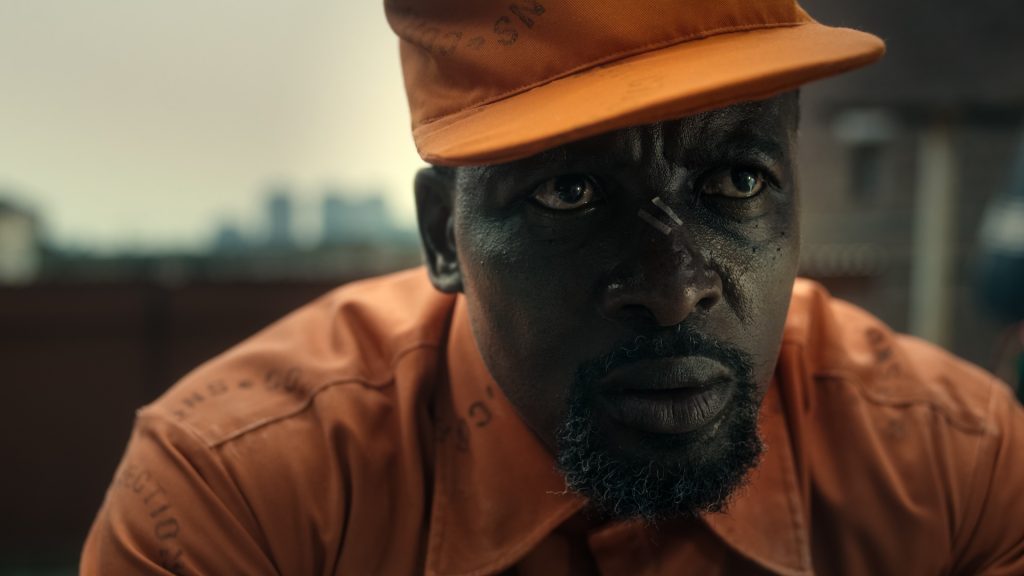
The prison is not merely a location in Umthetho. It is a power structure. Moses may be behind bars, but his influence stretches beyond them, and Kgoroge understands that. His performance makes Moses feel like a man who has learned how power works and is constantly calculating his next move. There is also a physicality to the performance that deserves recognition. The fight scenes throughout Umthetho are convincing enough to make the violence uncomfortable rather than cartoonish. Kgoroge takes an absolute beating in parts of the story, and there is something admirable about the commitment required to sell that kind of physical punishment on screen.
At times, Moses’ swollen eye and battered face look so convincing that you find yourself wondering how much was makeup and how much was the actor committing completely to the physical demands of the role. Not because violence itself is impressive, but because believable physical storytelling requires performers to surrender a certain amount of vanity. Kgoroge does that, and it pays off.
Sindi Dlathu is terrifying as Agnes
Then there is Sindi Dlathu. Agnes Khoza is loud, cruel, manipulative and violent. Dlathu understands exactly what kind of villain this character needs to be. Agnes does not simply administer a prison; she controls it. She has inmates tortured and continuously orchestrates killings. She works with Detective Tau, who also uses institutional authority as a weapon. The show is not subtle about her brutality, and there are moments when Agnes can feel like a heightened version of the corrupt prison authority figure we have seen before. But the award-winning actress’ performance gives the character enough force to remain magnetic.
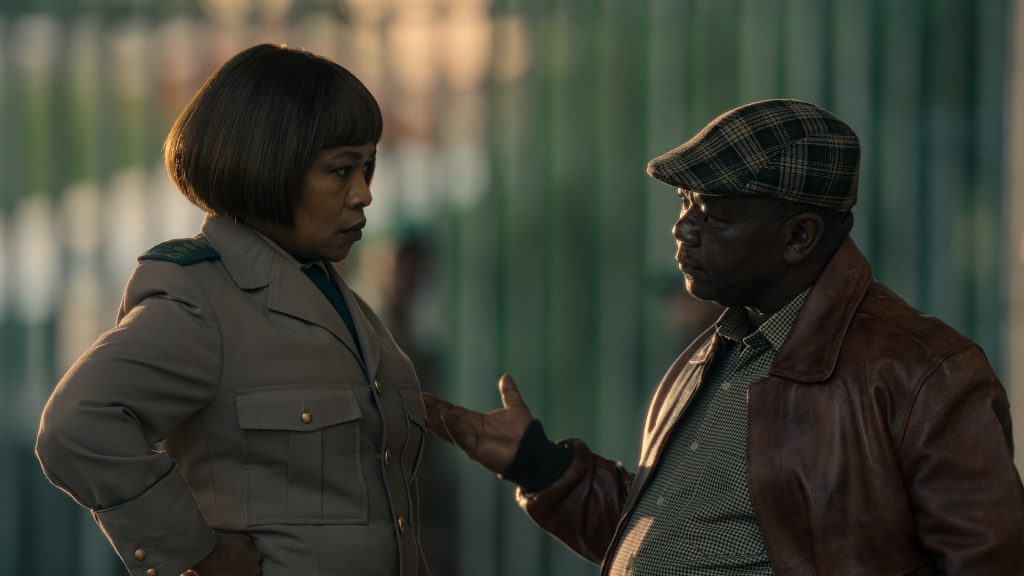
She is matched by industry legend Molefi Monaisa as Detective Bennet Tau, whose alliance with Agnes makes him one of the show’s most dangerous figures. Tau becomes deeply involved in the torture and suppression of Moses and the prison syndicate. His performance gives Tau the feeling of somebody who knows exactly how the institution works and understands how to exploit it.
Umthetho is packed with stellar performances
For viewers who remember his iconic work as Chester in Yizo Yizo, there is an unmistakable familiarity in the force Ernest Msibi brings to the screen. There is something about his presence as Scarra that immediately pulls your attention. He has that rare quality where, even when he is not doing much, you are watching him.
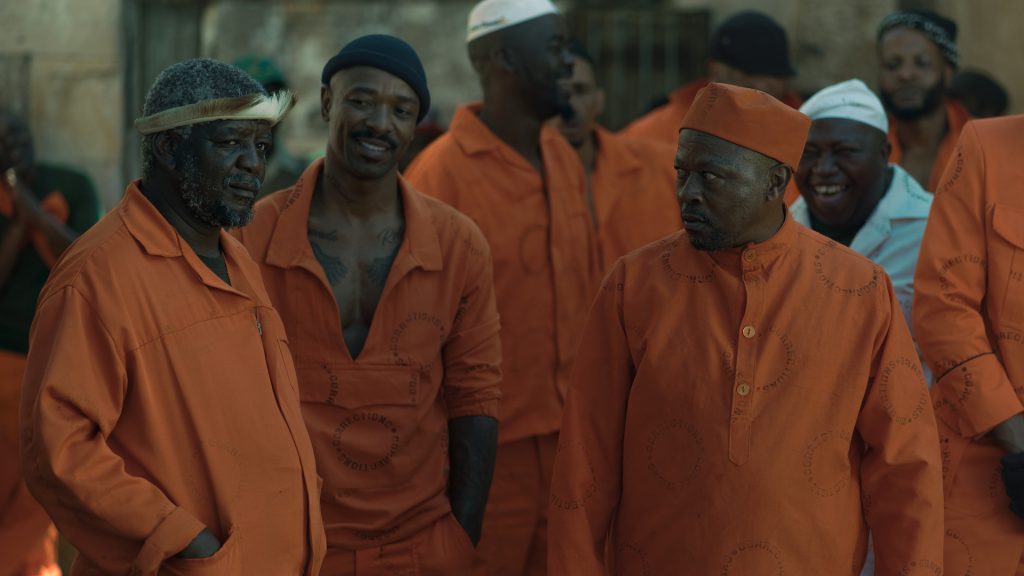
Lorcia Cooper-Khumalo brings emotional weight to Crystal, who is not simply Moses’ wife but a woman whose relationship with him was forged during his imprisonment. She was working as a nurse in the prison when she met Moses, and the two fell in love and eventually had a child together. Her determination to get him out of prison gives her relationship with Moses an emotional dimension that goes beyond the crime story.
The series also brings SK Khoza back to our screens as Zola, and the casting proves worthwhile. Zola spent time in prison with Moses and becomes close to Mbali as they attempt to confront the corruption surrounding them. The chemistry between Khumalo and Khoza is one of the show’s more enjoyable dynamics. Zola gives Mbali something she desperately needs: someone who understands the world she is being dragged into. He is also the person who ultimately finds himself in an agonising position involving his oldest friend Oros, played by Mandla Gaduka. Gaduka’s performance as Oros provides some much-needed comic relief. That might sound insignificant in a story this dark, but it is not. Crime dramas built entirely around brutality can become emotionally exhausting. The occasional moments of levity give the audience somewhere to breathe before the story throws another betrayal or act of violence at them.
Then there is Given Stuurman, who plays Sphelele, Mbali’s younger brother. His discovery that Moses is still alive becomes another major pressure point for the Dlamini family. Sphelele visits his older brother in prison and quickly finds himself endangered simply because of his association with Moses.
The predictable parts are the show’s weakness
There are stretches where the series feels like it is setting up the next betrayal rather than allowing its characters to breathe. At times, the thriller mechanics also take priority over character development. Agnes, in particular, can feel like too much. The series occasionally pushes her cruelty so far that the character begins to feel more like an embodiment of corruption than a fully rounded person.
That is not necessarily a problem in a heightened thriller, but it does mean that Umthetho is at its strongest when it steps away from the machinery of the plot and puts its characters under pressure.
Is Umthetho as good as the prison dramas it echoes?
Umthetho is not Wentworth or Prison Break. It is also not Lockdown. But comparing every prison drama to those shows misses what makes Umthetho interesting. This is a South African story built around South African performers, South African institutions and a distinctly South African understanding of family, loyalty and survival. Another important part of this Umthetho review is understanding where the series fits among South Africa’s existing prison dramas. The underlying story may have travelled from Brazil, but the emotional questions feel much closer to home.
And that is the point of a good adaptation. It should take an existing story and make you understand why it belongs here. Perhaps the most interesting thing to take away from the series is that it refuses to make justice and family easy opposites. Mbali’s problem is not simply that she has to choose between the law and her brother. It is that both sides of that equation are deeply flawed.
So, is Umthetho worth watching?
YES!!!
If you enjoy dark crime thrillers, morally complicated characters, prison dramas, family conflict and stories where every decision comes with a price, Umthetho deserves a place on your Netflix watchlist. Some of its twists are familiar, some stretches are slower than they need to be, but when Umthetho locks onto its central family, it becomes gripping.
And when the actors are given room to work, the series reminds you why South African television continues to produce performers capable of holding their own on a global streaming platform. Netflix‘s own recent material has positioned Umthetho as part of its growing slate of South African stories, and it’s always exciting to see the talent behind the production and to engage with the difficult questions around family, justice and communication that the series raises.
Umthetho is available to stream on Netflix.
Enjoyed Umthetho on Netflix? Explore more South African shows and movies to watch
-

What to watch after A Different World
Looking for shows to watch after A Different World? From Blood & Water and Miseducation to Sex Education, here are 10 Netflix shows to watch.
-
Blood Legacy S2 ending explained
Blood Legacy Season 2 ending explained: Find out who dies, what happens at the wedding and who survives the massacre in the finale.
-
What to watch on Netflix in October 2026
Looking for what to watch on Netflix in October 2026? From Seriously Single Too to How to Ruin Diwali, TYSON, Lupin and more, here’s what’s coming.
-
The best romantic series on Netflix right now
Looking for something steamy to watch? From Beauty in Black and Fatal Seduction to Sex/Life, here are the best romantic series on Netflix.
-
First Look at Blood Legacy S2
Blood Legacy Season 2 lands on Netflix in September. Here’s a first-look at the Ndlovu family, starring Xolile Tshabalala and Buyile Mdladla.
-
Umthetho Review: Is it worth watching?
Umthetho is Netflix’s seven-episode gripping new South African crime drama. Here’s our spoiler-filled Umthetho review.

All about Umthetho